120 citations
,
April 2019 in “The Journal of clinical investigation/The journal of clinical investigation” Both estrogens and androgens are important for health in both males and females.
 3 citations
,
February 2005 in “Aktuelle Dermatologie”
3 citations
,
February 2005 in “Aktuelle Dermatologie” Prolactin and TGF-β receptor blockers might help treat hair loss.
 1 citations
,
January 2009 in “Trepo - Institutional Repository of Tampere University”
1 citations
,
January 2009 in “Trepo - Institutional Repository of Tampere University” Vitamin D may help regulate cholesterol and influence prostate cancer development.
 1 citations
,
March 2025 in “Medical Molecular Morphology”
1 citations
,
March 2025 in “Medical Molecular Morphology” Androgens affect the function and health of the endometrium.
 48 citations
,
July 2008 in “Acta Biochimica et Biophysica Sinica”
48 citations
,
July 2008 in “Acta Biochimica et Biophysica Sinica” Wnt signaling is important for development and cell regulation but can cause diseases like cancer when not working properly.
November 2005 in “PubMed” The hairless gene in Kunming mice is important for hair and skin, and shows genetic variations.
April 2025 in “Frontiers in Pharmacology” Canagliflozin helps overcome progestin resistance in certain endometrial cancer cells.
 23 citations
,
September 2021 in “Frontiers in Cellular and Infection Microbiology”
23 citations
,
September 2021 in “Frontiers in Cellular and Infection Microbiology” Testosterone's effects on COVID-19 are unclear and need more research.
May 2023 in “Journal of Cosmetic Dermatology” Androgenetic alopecia is linked to higher cardiovascular and metabolic risks, possibly due to irisin resistance.
8 citations
,
May 2025 in “Pharmaceuticals” In 2024, the FDA approved 27 innovative small-molecule drugs, with many offering significant treatment improvements.
 16 citations
,
January 2003 in “Nuclear Receptor Signaling”
16 citations
,
January 2003 in “Nuclear Receptor Signaling” Androgens and SARMs play a role in body mass, frailty, skin health, and hair growth, and are used in treating prostate cancer, acne, and hair loss, with potential for new uses and improved versions in the future.
 66 citations
,
January 2001 in “Vitamins and hormones”
66 citations
,
January 2001 in “Vitamins and hormones” Androgen receptors are key for development and health, affecting conditions like prostate cancer and male pattern baldness.

Targeting androgen receptors in the skin is the most effective treatment for hyperandrogenism-related skin issues.
 48 citations
,
January 2011 in “Hormone Research in Paediatrics”
48 citations
,
January 2011 in “Hormone Research in Paediatrics” The conclusion is that genetic changes in the glucocorticoid receptor can lead to conditions affecting stress response, immunity, and metabolism, requiring personalized treatment.
 May 2026 in “Zenodo (CERN European Organization for Nuclear Research)”
 Androgenetic alopecia is common hair loss caused by genetics and hormones, with treatments mainly slowing it down.
 May 2026 in “Zenodo (CERN European Organization for Nuclear Research)”
 Androgenetic alopecia is common hair loss caused by genetics and hormones, with treatments to slow it but no cure.
 April 2026 in “Zenodo (CERN European Organization for Nuclear Research)”
 The model improves understanding of androgen interactions by focusing on signal intensity and system capacity.
 January 2010 in “Yearbook of Endocrinology”
 Older men with lower levels of available testosterone are more likely to be frail.
 April 2019 in “Molecular Informatics”
 Researchers developed reliable models to predict how well certain compounds bind to androgen receptors, emphasizing the importance of atomic electronegativity.
 18 citations
,
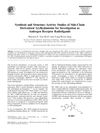
April 2001 in “Bioorganic & Medicinal Chemistry Letters”
18 citations
,
April 2001 in “Bioorganic & Medicinal Chemistry Letters” The nature of the side chain in RU 58841 derivatives greatly affects its AR affinity, with the N-(iodopropenyl) derivative 13 showing the highest AR binding affinity, suggesting its potential for developing high-affinity radioiodinated AR radioligands.
 60 citations
,
May 2015 in “Archives of dermatological research”
60 citations
,
May 2015 in “Archives of dermatological research” PPAR agonists show promise for skin conditions but need more research before being a main treatment.
 18 citations
,
January 2001 in “Annual Reports in Medicinal Chemistry”
18 citations
,
January 2001 in “Annual Reports in Medicinal Chemistry” Selective Androgen Receptor Modulators (SARMs) are drugs that can control the effects of androgens in different tissues, potentially having fewer side effects and promising for treating various conditions.
 December 2017 in “Elsevier eBooks”
 The vitamin D receptor helps maintain hair and bone health even without binding vitamin D.
 271 citations
,
September 2008 in “Nutrition reviews”
271 citations
,
September 2008 in “Nutrition reviews” Vitamin D receptor interacts with certain dietary components to help prevent diseases and regulate hair growth.
 8 citations
,
May 2018 in “The Journal of Allergy and Clinical Immunology”
8 citations
,
May 2018 in “The Journal of Allergy and Clinical Immunology” Activating the Nrf2 pathway reduces inflammation and cell activation in human hair follicles, suggesting a potential treatment for certain hair loss conditions.
 January 2013 in “International journal of trichology”
 Vitamin D3 and its receptor are important for hair growth, and understanding receptors could help treat hair graying and skin cancer.
Newer retinoid drugs are effective for skin conditions but have significant side effects.
 40 citations
,
November 2009 in “Experimental Dermatology”
40 citations
,
November 2009 in “Experimental Dermatology” The mineralocorticoid receptor may play a role in skin and hair health and could be a new target for treating related disorders.
 33 citations
,
January 2013 in “Dermatology”
33 citations
,
January 2013 in “Dermatology” Over half of the adult women with acne in the study had higher than normal levels of male hormones, especially DHEA.
 11 citations
,
August 2009 in “Expert Opinion on Drug Discovery”
11 citations
,
August 2009 in “Expert Opinion on Drug Discovery” We need better ways to test and understand SARMs to make safer and more effective treatments.