4 citations
,
June 2025 in “Cell Reports” Clonally expanded CD8+ T cells cause alopecia areata.
 4 citations
,
January 2023 in “Skin health and disease”
4 citations
,
January 2023 in “Skin health and disease” Blocking Janus kinase 1 helps stop inflammation and regrow hair, making it a good treatment for hair loss from alopecia areata.
2 citations
,
October 2025 in “Frontiers in Medicine” Deuruxolitinib effectively improves hair regrowth in alopecia areata but requires monitoring for side effects.
2 citations
,
May 2025 in “Journal of Clinical Medicine” Upadacitinib is safe and effective for treating alopecia areata and atopic dermatitis in children.
2 citations
,
May 2025 in “BMJ Open” Patients with alopecia areata face treatment barriers due to lack of reimbursement and need more support and information.
2 citations
,
June 2024 in “Journal of Clinical Medicine” Alopecia Areata can affect nails, often improving on its own, but JAK inhibitors may help.
 2 citations
,
November 2023 in “Acta dermato-venereologica”
2 citations
,
November 2023 in “Acta dermato-venereologica” Tofacitinib is effective and safe for treating alopecia areata with a good drug survival rate.
 2 citations
,
June 2023 in “Indian journal of dermatology, venereology, and leprology”
2 citations
,
June 2023 in “Indian journal of dermatology, venereology, and leprology” Janus kinase inhibitors can regrow hair in alopecia areata but may cause side effects and hair loss may return if treatment stops.
1 citations
,
October 2025 in “Journal of Microbiology and Biotechnology” Natural extracts may promote hair growth with fewer side effects than conventional treatments.
1 citations
,
October 2025 Smart hydrogels improve wound healing by adapting to needs and releasing medicine.
1 citations
,
March 2025 in “JAAD reviews.” Significant progress has been made in treating skin, hair, and nail disorders in people with skin of color, but disparities still exist.
1 citations
,
December 2024 in “Indian Dermatology Online Journal” Biologics and small molecules can effectively treat inflammatory nail disorders, but personalized treatment plans are important.
1 citations
,
December 2023 in “Molecules/Molecules online/Molecules annual” JAK inhibitors show promise for treating various skin diseases.
 1 citations
,
June 2023 in “Genes”
1 citations
,
June 2023 in “Genes” Hair loss from Alopecia Areata is caused by both genes and environment, with several treatments available but challenges in cost and relapse remain.
 1 citations
,
June 2023 in “Dermatology and therapy”
1 citations
,
June 2023 in “Dermatology and therapy” People with Alopecia Areata have more herpes simplex infections but similar rates of cancer, blood clots, and heart disease compared to those without it.
 1 citations
,
March 2023 in “Clinical, Cosmetic and Investigational Dermatology”
1 citations
,
March 2023 in “Clinical, Cosmetic and Investigational Dermatology” Current treatments for Alopecia Areata have mixed success, and there's a need for better, more accessible options and support for affected individuals.
 July 2026 in “Dermatology and Therapy”
 Alopecia areata in Brazil causes significant psychosocial impacts, with limited access to advanced treatments, especially in public healthcare.
 July 2026 in “Applied Sciences”
 Excimer laser therapy can help regrow hair in alopecia areata but is less effective for severe cases and has mixed results for cicatricial alopecia.
 June 2026 in “Frontiers in Medicine”
 Hair-loss trials have increased, but need more diverse participants and standardized measures.
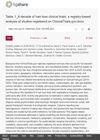
More hair-loss studies are needed with standardized outcomes and diverse participants.
 May 2026 in “Journal of Personalized Medicine”
 Alopecia areata is linked to iron deficiency anemia, suggesting iron levels should be checked and managed in these patients.
May 2026 in “Clinical Reviews in Allergy & Immunology”  May 2026 in “Frontiers in Medicine”
 Androgenetic alopecia is linked to factors like age, family hair loss history, diet, and health conditions.
 May 2026 in “International Journal of Molecular Sciences”
 Chemotherapy-induced hair loss may be linked to immune system changes, and certain treatments could help but need careful use.
 April 2026 in “Frontiers in Medicine”
 Farudodstat may help prevent hair loss in alopecia areata by stopping immune attacks on hair follicles.

Farudodstat can prevent hair follicle immune damage linked to alopecia areata.
 April 2026 in “BioNanoScience”
 A new microneedle system may improve hair loss treatment by delivering ketoconazole directly to hair follicles.
April 2026 in “Meditsinskiy sovet = Medical Council” Tofacitinib and baricitinib are similarly effective and safe for alopecia areata, but baricitinib works faster.
 April 2026 in “Journal of Inflammation Research”
 Alopecia areata and atopic dermatitis share immune system issues, and treatments like JAK inhibitors can help both.
 March 2026 in “Journal of Nanobiotechnology”
 A new microneedle treatment can effectively repigment skin in vitiligo.