 April 2026 in “International Journal of Homoeopathic Sciences”
 Homeopathic treatment improved stress-induced hair loss in an 18-year-old female.
A rare skin reaction occurred when a man took paracetamol, causing a new rash in an area already affected by hair loss.
 November 2025 in “The Bioscan.”
 Pix Liquida may help treat alopecia areata.

A woman with a rare hair loss condition developed skin cancer in the bald area.
 August 2025 in “Scientific Electronic library online (Sciences Carlos III Health Institute)”
 Tofacitinib can help regrow hair in about 50% of people with moderate-severe alopecia areata.

Brunsting-Perry pemphigoid can cause scarring hair loss and may be underdiagnosed.
 April 2025 in “International Journal of Homoeopathic Sciences”
 Homeopathic treatment helped a girl regrow hair after other treatments failed.
 April 2025 in “International Journal of Homoeopathic Sciences”
 Homeopathy helped regrow hair and improve emotional health in alopecia areata.
 April 2025 in “International Journal of Homoeopathic Sciences”
 A 7-year-old boy's hair regrew and his well-being improved after homeopathic treatment for alopecia areata.
 March 2025 in “International Journal of Scientific Research in Science and Technology”
 Early diagnosis and personalized treatment can lead to significant hair regrowth in children with alopecia areata.
 January 2025 in “Dermatology Practical & Conceptual”
 Perinevoid alopecia can be effectively treated with non-invasive corticosteroids.
 January 2025 in “International Journal of Homoeopathic Sciences”
 Personalized homeopathic treatment may help manage alopecia areata.
 September 2024 in “African Journal of Biomedical Research”
 Alopecia areata patients have lower vitamin D and slightly lower copper levels, so these should be checked.
 July 2024 in “International Journal of Pharmaceutical Sciences and Medicine”
 Nyctanthes arbor-tristis is effective for treating many health issues.
 May 2024 in “Clinical, cosmetic and investigational dermatology”
 5% topical minoxidil effectively treated a boy's congenital triangular alopecia without side effects.
 March 2024 in “Nevşehir Hacı Bektaş Veli Üniversitesi SBE Dergisi”
 Art therapy may help reduce anxiety and depression in people with Alopecia Areata.
 January 2024 in “Jurnal Ilmu Kesehatan Hewan”
 Oreo the dog got better from skin and worm infections after treatment and cleaner living conditions.
 January 2024 in “International Journal of Homoeopathic Sciences”
 Individualized homeopathic treatment can effectively treat alopecia areata.

Combining baricitinib with golimumab helped regrow hair in a patient with ankylosing spondylitis and alopecia areata.
 December 2023 in “Medical & Clinical Case Reports Journal”
 Ayurvedic treatment, including leech therapy, can effectively regrow hair in alopecia areata.

A neck lesion misdiagnosed as benign was later treated successfully with Mohs Micrographic Surgery.
 October 2023 in “Research Square (Research Square)”
 Oxidative stress is linked to mild patchy alopecia areata.
 May 2023 in “Tạp chí Da liễu học Việt Nam”
 Histopathological examination is essential for diagnosing alopecia areata.

A 12-year-old girl was misdiagnosed with alopecia areata but actually had a nevus sebaceus with a genetic mutation.
 October 2022 in “International Journal of Homoeopathic Sciences”
 Homeopathic treatment may help with beard hair loss.
 January 2022 in “Frontiers in Medical Science Research”
 Blood stasis is the main cause of spot baldness, and treatments should focus on improving blood circulation.
 October 2021 in “Dermatology Reports”
 Higher IL-17A levels indicate more severe alopecia areata.
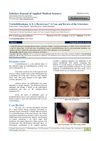 June 2021 in “Scholars journal of applied medical sciences”
 Trichofolliculoma, a rare benign hair follicle tumor, can potentially recur.
 April 2021 in “BMJ Case Reports”
 Accurate diagnosis of pseudolymphomatous folliculitis is crucial to avoid mistaking it for more serious conditions.
 January 2021 in “Skin appendage disorders”
 The report concludes that atypical Brauer nevus is more common in males, present at birth, and often misdiagnosed due to its unusual scalp locations.