 55 citations
,
August 2015 in “AAPS PharmSciTech”
55 citations
,
August 2015 in “AAPS PharmSciTech” The cream with orange peel and liquorice extracts may help reduce skin aging.
 January 2025 in “International Journal of Veterinary Science”
 Hibiscus leaf ointment helps hair growth and reduces UV skin damage in rats.
48 citations
,
May 2021 in “Molecules” Plant extracts from dry flowers can be used as safe, effective dyes in cosmetics, offering skin protection and anti-aging benefits.
 5 citations
,
January 2011 in “Korean Journal of Pharmacognosy”
5 citations
,
January 2011 in “Korean Journal of Pharmacognosy” Fermented Cornus officinalis promotes hair growth better than minoxidil.
55 citations
,
January 2000 in “Cell biochemistry and function” Alopecia patients have lower antioxidants and higher lipid damage in their blood.
July 2023 in “Belarusian State Pedagogical University repository (Belarusian State Pedagogical University)” Litchi twigs and leaves may help treat hair loss and reduce agricultural waste.

Nanoformulations improve luteolin's effectiveness as a cancer treatment.
January 2026 in “Microchemical Journal” A new method accurately detects minoxidil in hair lotions, revealing discrepancies in labeled content.
January 2011 in “Journal of Jiangnan University” A reliable method was developed to measure minoxidil in hair products.
 1 citations
,
July 2022 in “Plant Cell, Tissue and Organ Culture (PCTOC)”
1 citations
,
July 2022 in “Plant Cell, Tissue and Organ Culture (PCTOC)” The study found that in Eclipta prostrata roots, coumestans come from acetate and shikimate pathways, and phenylpropanoid is made only through the shikimate pathway.
 13 citations
,
February 2018 in “Bio-medical Materials and Engineering”
13 citations
,
February 2018 in “Bio-medical Materials and Engineering” Minoxidil inside tiny particles can deliver more drug to hair follicles, potentially improving treatment for hair loss.
 15 citations
,
April 2020 in “Journal of The American Academy of Dermatology”
15 citations
,
April 2020 in “Journal of The American Academy of Dermatology” Oral minoxidil can increase or maintain hair thickness in most people with lichen planopilaris, with mild side effects.
January 2026 in “Journal of Materials Chemistry B” A special solvent helps hydroxytyrosol penetrate skin better, promoting hair growth.
4 citations
,
March 2023 in “Molecules/Molecules online/Molecules annual” Gallic acid and ferulic acid can be sustainably extracted for hair supplements with high efficiency and stability.
 2 citations
,
February 2022 in “Research Square (Research Square)”
2 citations
,
February 2022 in “Research Square (Research Square)” The ethanolic root extract of Onosma dichroantha has strong antioxidant and antibacterial properties.

MLO proteins are crucial for root hair growth by regulating calcium and ROS levels.
September 2022 in “The Korean Tea Society” Houttuynia cordata compounds may help with anti-aging and hair loss.
 March 2026 in “Journal of Pharmacy & Pharmacognosy Research”
 Clove and rosemary oils together promote hair regrowth better than minoxidil.

Essential oils in a nanoemulsion help hair grow better than minoxidil 2% in mice.
August 2025 in “Asian Journal of Pharmaceutical Research and Development” The polyherbal hair oil effectively improves hair and scalp health with multiple benefits.
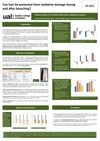 September 2018 in “University of the Arts London Research Online (University of the Arts London)”
 L-arginine, hydrolysed keratin, and cystine-silanol copolymer can help protect hair from damage during and after bleaching.
 February 2024 in “PubMed”
 The new minoxidil lotion using Aloplus Total is stable and can be mixed with other ingredients for treating hair loss.
3 citations
,
November 2024 in “Electrochimica Acta” A new, quick method accurately detects minoxidil in drugs and cosmetics.
5 citations
,
January 2013 in “PubMed” Lavender and Tea tree oils may effectively reduce mild unwanted hair growth in women.
August 2026 in “Journal of Drug Delivery Science and Technology” 79 citations
,
January 1975 in “Food and Cosmetics Toxicology” The hair dye formulations tested did not cause long-term toxicity or cancer in mice.
August 2015 in “아시안뷰티화장품학술지” Ethanol and ultrasonic wave extraction methods are best for making effective cosmetics and anti-hair loss products.
 19 citations
,
September 1999 in “Talanta”
19 citations
,
September 1999 in “Talanta” New method measures minoxidil concentration faster, more accurately, and automatically.
46 citations
,
March 2009 in “Die Pharmazie” Minoxidil-loaded nanostructured lipid carriers are effective for topical use.
13 citations
,
November 2022 in “Journal of King Saud University - Science” Juniperus excelsa, Olea oleaster, and Olea europaea have potential as natural antioxidants and wound healing agents.