 1 citations
,
April 2023 in “Clinical, cosmetic and investigational dermatology”
1 citations
,
April 2023 in “Clinical, cosmetic and investigational dermatology” Antigens from skin cells may cause hair loss in perinevoid alopecia.
 35 citations
,
April 2012 in “Journal of Clinical Psychopharmacology”
35 citations
,
April 2012 in “Journal of Clinical Psychopharmacology” Finasteride reduces gambling symptoms in Parkinson's patients.
12 citations
,
January 2013 in “Indian dermatology online journal” Dermatopathia pigmentosa reticularis causes skin discoloration, hair loss, and nail problems.
1 citations
,
February 2023 in “IntechOpen eBooks” Targeted photodynamic therapy is a promising method for precise disease treatment and diagnosis.
CDPDFM can improve acne symptoms in rabbit ears.
6 citations
,
December 2023 in “Journal of Molecular Cell Biology” Removing Gsdma1/2/3 genes reduces skin cell overgrowth by blocking a specific cell pathway.
 June 2023 in “Journal of cosmetic dermatology”
 Both DPCP alone and with PRP are effective and safe for treating severe alopecia areata.
 May 2022 in “Benha Journal of Applied Sciences”
 Higher levels of PD-L1 are linked to more severe hair loss in people with Alopecia Areata.
23 citations
,
July 2015 in “PubMed” PDGF and its receptors are crucial for stem cell growth and function.
January 2026 in “Andrology” PRP injections are safe but don't significantly improve Peyronie's Disease.
 February 2006 in “Journal of The American Academy of Dermatology”
 Most patients with anal Pemphigus Vulgaris had repeated episodes but fully recovered with treatment, without long-term problems.
1 citations
,
January 2022 in “Skin appendage disorders” DCPA is a chronic skin condition affecting the legs, often misdiagnosed, and needs more research for better understanding and treatment.
3 citations
,
October 2024 in “Frontiers in Pharmacology” Compounds from Pterocarpus indicus may help treat benign prostatic hyperplasia by stopping cell growth.
10 citations
,
January 2012 in “Case reports in medicine” Diphencyprone can cause unexpected and possibly permanent vitiligo.
 January 2018 in “Springer eBooks”
 PDE inhibitors, especially PDE4 inhibitors like apremilast, are effective for certain inflammatory skin conditions but have side effects and can be costly.
January 2014 in “cIRcle (University of British Columbia)” Photoacoustic imaging can detect prostate brachytherapy seeds better with enhanced contrast methods, but depth limits remain.
13 citations
,
August 2017 in “Journal of Cellular Physiology” PD‐L1 and PD‐L2 may not effectively control immune activation in alopecia areata.
4 citations
,
July 2023 in “Frontiers in Microbiology” HGF combined with ADA is highly accurate for diagnosing tuberculous pleural effusion, especially in younger females.
 December 2007 in “Röntgenpraxis”
 Popliteal Artery Entrapment Syndrome (PAES) is a rare but possible cause of leg pain during walking, even in untrained women.
3 citations
,
April 2024 in “JAAD Case Reports” DPCP may be safe for treating alopecia during pregnancy, but more research is needed.
January 2026 in “JPRAS Open” PDLLA scalp injections improved hair regrowth in most patients with non-scarring alopecia.
47 citations
,
October 2021 in “Journal of Nanobiotechnology” HPDAlR nanoparticles greatly improve skin wound healing without toxicity.
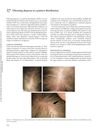 April 2012 in “Informa Healthcare eBooks”
 Fibrosing alopecia in a pattern distribution is a unique hair loss condition with inflammation and scarring, resembling but distinct from common balding.
 September 2021 in “Hair transplant forum international”
 The P&P Hairline Laser is a new, hands-free device that improves hairline symmetry in hair restoration surgery and can create a symmetrical hairline in less than a minute.
 March 2005 in “Journal of The American Academy of Dermatology”
 Diphencyprone treatment protocols could be simplified as no harm occurred despite not fully following them.
10 citations
,
June 2019 in “Dermatologic therapy” DPCP alone is more effective and safer for treating chronic extensive alopecia areata than combining it with anthralin.
 October 2021 in “Journal of Investigative Dermatology”
 Skin changes in Pseudoxanthoma elasticum patients can indicate the severity of related health issues.
October 2022 in “Amplla Editora eBooks” Deep Brain Stimulation helps manage Parkinson's symptoms when medication isn't enough.
18 citations
,
December 2016 in “European journal of pharmacology” A new compound slows cancer cell growth and causes cell death by blocking cell cycle progression and increasing cell-damaging molecules.
1 citations
,
August 2024 in “Skin Health and Disease” Topical immunotherapy with DPCP led to some hair regrowth in most pediatric alopecia areata patients, especially those with milder cases and longer treatment.