
The polyherbal hair mask is a safe and effective alternative for improving hair health.
 January 2025 in “International Journal of Pharmacognosy and Life Science”
 Herbal treatments like Aloe vera, Bhringraj, Neem, Tea tree oil, Amla, and Hibiscus are promising for safer, effective hair care.
 November 2024 in “Journal of Clinical Medicine”
 The treatment improved hair thickness, shine, and reduced hair loss effectively.
 October 2024 in “International Journal of Pharmaceutical Sciences Review and Research”
 A 5% minoxidil spray could effectively treat male baldness with fewer side effects and better patient comfort.
September 2024 in “Preprints.org” Hair protects the scalp from skin cancer by aiding immune defense.
 August 2024 in “International Journal For Multidisciplinary Research”
 Ayurvedic treatment reduced hair loss and improved scalp health effectively.
 July 2024 in “International Journal of Pharmacognosy and Life Science”
 An herbal hair serum with natural ingredients can help reduce hair loss and improve hair health.
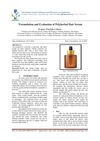 June 2024 in “International Journal of Pharmaceutical Research and Applications”
 Polyherbal hair serum can hydrate the scalp and promote hair growth safely.
 April 2024 in “International Research Journal Of Modernization In Engineering Technology And Science”
 Herbal shampoos are effective, non-toxic alternatives for treating dandruff and hair fall.
 January 2024 in “International Journal of Health Science”
 Scalp cooling and low-power light therapy show promise in reducing chemotherapy-induced hair loss but need more research.
 November 2023 in “International journal of Ayurveda and pharma research”
 The herbal hair oil effectively promotes hair growth, nourishes the scalp, and prevents dandruff.
 January 2023 in “Skin appendage disorders”
 Scalp microinfusion is a new method for treating hair loss that shows promise but needs more research for standardization.
 June 2022 in “Plastic and Reconstructive Surgery – Global Open”
 Stem cell serum effectively treated hair loss caused by COVID-19.
 May 2022 in “Pharmacognosy journal”
 Moringa seed oil may help prevent hair loss and promote hair growth.
 January 2022 in “Plastic and Aesthetic Research”
 Choose the simplest, most fitting scalp reconstruction method for each patient's unique needs.
 June 2020 in “Journal of Dermatological Treatment”
 Use telemedicine and strict hygiene for safe hair and scalp treatments during COVID-19.

The document concludes that diagnosing female hair loss requires careful examination, with treatments varying by condition and psychological support often necessary.
 July 2018 in “Elsevier eBooks”
 New hair loss treatments show promise, but more research is needed to confirm their effectiveness.
 April 2017 in “Journal of Investigative Dermatology”
 Applying pseudoceramide improved skin and hair health.
 January 2017 in “Elsevier eBooks”
 The document concludes that choosing the right forehead and brow lifting technique based on individual patient characteristics is crucial to prevent complications and achieve desired results.
 April 2014 in “Journal of Aesthetic Nursing”
 Mesotherapy with natural extracts and vitamins can improve hair loss and promote regrowth in most women.
 September 2007 in “Dermatologic Surgery”
 3% hydrogen peroxide does not reduce hair graft survival compared to saline.
 February 2004 in “Dermatologic Surgery”
 Deep Plane Fixation in scalp surgeries allows for more tissue removal with less tension and minimal scarring.
 October 2003 in “Journal of Investigative Dermatology Symposium Proceedings”
 Mice treatments didn't grow hair, a patient treatment may affect immune response, and people with hair loss often feel anxious or depressed.
 May 2026 in “Organoid Research”
 Hydrogel-based hair follicle organoids could help treat hair loss and improve drug testing.

Polyphenolic compounds may help improve hair growth in non-scarring alopecia.
 April 2026 in “Frontiers in Cell and Developmental Biology”
 CD200- cells in hair follicles have a higher ability to regenerate hair.
 April 2026 in “Experimental & Molecular Medicine”
 Mouse and human skin development share similar fibroblast timelines.

Bio-nanovesicles could improve hair and skin regeneration by delivering important molecules to repair and heal.
 January 2026 in “Theoretical and Natural Science”
 Targeting Lgr5+ stem cells and Wnt signaling may effectively treat hair loss.