 June 2026 in “Research Square”
 THBS4 helps hair grow by activating hair follicle stem cells.
 June 2026 in “Food Science and Human Wellness”
 Tail fat from Lanzhou Fat-Tailed sheep helps heal skin wounds by reducing inflammation and promoting tissue repair.

Plant-derived exosomes show promise for healing skin wounds but need more research and trials.
 March 2026 in “Preprints.org”
 The combined stem cell secretome in the skin care product effectively reduces inflammation and promotes tissue regeneration.
 February 2026 in “BMC Genomics”
 MEG3-miRNAs help control wool traits in young Tan sheep by regulating immune responses, but their decline with age leads to wool changes.
 February 2026 in “Human Cell”
 MSC-CM can boost skin cell growth and movement, aiding skin repair.
January 2026 in “Veterinary Sciences” Skin maturation in Dezhou donkey foals involves better barrier function, hair growth, and less collagen production.
 January 2026 in “BIO Web of Conferences”
 FGFs have evolved differently across species, affecting skin functions and wound healing.
December 2025 in “International Journal of Molecular Sciences” Centella asiatica extract taken orally can reduce skin aging from UVB exposure.
December 2025 in “Advanced Healthcare Materials” The Spherical Skin Model improves drug and cosmetic testing by accurately mimicking human skin for efficient compound screening.
 October 2025 in “International Wound Journal”
 Gamma-irradiated amniotic fluid improves healing and reduces thickness of hypertrophic scars.
 October 2025 in “Clinical Cosmetic and Investigational Dermatology”
 Targeting specific cell interactions may help treat skin fibrosis.
January 2025 in “Zenodo (CERN European Organization for Nuclear Research)” Collagen supplements may modestly improve skin and joint health, but effects on metabolism and blood sugar are inconsistent.
January 2025 in “Zenodo (CERN European Organization for Nuclear Research)” Collagen supplements may improve skin and joint health but have inconsistent effects on blood sugar and heart health.
 April 2024 in “Frontiers in physiology”
 Immune cells are crucial for hair growth and preventing hair loss.
February 2024 in “International journal of molecular sciences” Type 3 Innate Lymphoid Cells help maintain skin health and balance, and are involved in skin diseases and healing.
 November 2023 in “Advanced functional materials”
 Magnesium Silicate Sprays help heal burn wounds and regrow skin features better than commercial products.
 September 2023 in “Çukurova medical journal (Online)/Çukurova medical journal”
 EZH2 levels decrease as fetuses develop and are higher in adult skin, which may affect skin growth and repair.
 June 2020 in “Journal of Investigative Dermatology”
 The technique effectively shows how human skin and hair cells form into ball-like structures.
 June 2018 in “Biomedical Journal of Scientific & Technical Research”
 Cells can change to help heal wounds better.
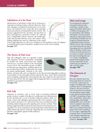 May 2015 in “Journal of Investigative Dermatology”
 Melanoma risk tools need improvement, a gene mutation causes a hair disorder that might be treated by managing cell stress, a potential therapy for a skin-ear disorder involves blocking cell channels, skin wrinkling may indicate lung aging regardless of smoking, and oxidative stress might contribute to common baldness.
 August 2012 in “Nature Cell Biology”
 A pathway helps maintain long telomeres in both stem and cancer cells.
 January 2012 in “Journal of Investigative Dermatology”
 Small molecule DMF improves psoriasis and multiple sclerosis, adult skin cells can be made to grow new hair, certain skin cells initiate hair growth, IL-17C controls gut health and can cause skin inflammation, and skin cells produce IL-17 that can lead to psoriasis.
Surgical repigmentation can permanently restore color to white hair in vitiligo patients.
 October 1982 in “American Journal of Nursing”
 Wound healing is a complex process involving different cells and stages, leading to scar tissue formation and strength increase over time.
September 2017 in “Journal of Investigative Dermatology” RCS-01 is safe and may help rejuvenate aging skin.
 2 citations
,
November 2023 in “International Journal for Research in Applied Science and Engineering Technology”
2 citations
,
November 2023 in “International Journal for Research in Applied Science and Engineering Technology” Nanofibers help heal burns effectively by improving skin restoration and reducing scars.
 3 citations
,
December 2023 in “Cell proliferation”
3 citations
,
December 2023 in “Cell proliferation” Stuff from umbilical cord stem cells helps skin heal and look younger.

Advances in RNA research and skin models offer hope for better skin healing without scarring.
Inhibiting IL-17 and IL-23 improves wound healing in obese, diabetic mice by promoting healing macrophages.