 June 2026 in “Journal of Clinical Medicine”
 The new scalp therapy shows promise for hair growth but needs more research.
June 2026 in “Frontiers in Cell and Developmental Biology” Expanded ADSCs improve fat graft survival better than SVF.
 April 2026 in “Stem Cell Research & Therapy”
 Regenerative treatments improve hair growth in androgenetic alopecia with mild side effects.
 March 2026 in “Frontiers in Cell and Developmental Biology”
 Autologous cell-based therapies, especially SVF, effectively and safely improve atrophic acne scars.
 February 2026 in “Plastic and Aesthetic Research”
 Regenerative aesthetic medicine aims to restore tissue function, but needs more consistent evidence and standardized practices.
 November 2025 in “IECCMEXICO”
 Regenerative therapies are improving aesthetic surgery by enhancing tissue quality and healing.
Stem cell treatments show promise for improving skin and hair, but need more research and standardization.
Autologous Regenerative Therapy may improve hair restoration by using stem cells from fat.
Combining regenerative therapy with light treatment can effectively promote hair growth.
 May 2024 in “International Society of Hair Restoration Surgery”
 New treatments like PRP, PRF, SVF, exosomes, and LLLT show promise for hair growth.
 April 2024 in “Skin research and technology”
 Adding stromal vascular fraction to platelet-rich plasma injections did not significantly improve hair growth in androgenetic alopecia treatment.
 September 2023 in “International Journal of Trichology”
 Adipose-derived stem cells may help with hair loss, but more research is needed.
 May 2021 in “Біомедична інженерія і технологія”
 Fat tissue's stromal-vascular fraction has stem cells that could be used for regenerative medicine, but official treatment protocols are not yet approved.
January 2021 in “Faculty of 1000 Research Ltd” The treatment showed promising hair growth results but needs more research.
January 2021 in “Faculty of 1000 Research Ltd” Combining SVF cells with PRP may boost hair growth in androgenic alopecia.
July 2017 in “DOAJ (DOAJ: Directory of Open Access Journals)” SVF-enhanced fat injections may effectively treat baldness by promoting hair growth.
January 2026 in “Minia Journal of Medical Research” SVF cell therapy may help regenerate hair in androgenic alopecia.
 January 2022 in “Stem cell biology and regenerative medicine”
 Stem cell therapies show promise for hair regrowth but need more research to confirm effectiveness.
March 2022 in “Al-Azhar International Medical Journal (Print)” SVF treatment is more effective than Nanofat for hair growth.
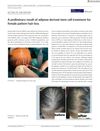 April 2021 in “Journal of Cosmetic Dermatology”
 Stem cell treatment improved hair density in female hair loss patient.
 March 2020 in “QJM: An International Journal of Medicine”
 SVF and PRP improve hair loss, but SVF causes more side effects.
May 2021 in “F1000Research” The treatment led to denser, thicker hair growth and less hair loss.
36 citations
,
July 2022 in “Stem Cell Research & Therapy” SVF may improve nanofat treatment for acne scars, but more research is needed.
January 2025 in “Journal of Carcinogenesis” Stromal vascular fraction and topical minoxidil both improve hair growth similarly, but SVF offers a better treatment experience.
16 citations
,
February 2013 in “Molecular Medicine Reports” CD34+ cells from fat tissue help form hair follicles and blood vessels in skin.
7 citations
,
May 2025 in “Cells” Adipose tissue-derived therapies show promise for improving osteoarthritis symptoms but need more research for safety and effectiveness.
1 citations
,
August 2025 in “Biology Direct” Adipose tissue therapies have advanced from tissue to cell and cell-free treatments, showing promise but also limitations.
 November 2023 in “Journal of cosmetic dermatology”
 Fat transplants using a patient's own fat can rejuvenate and repair tissues effectively.
January 2022 in “Springer eBooks” Combining PRP with lipofilling shows promise for tissue regeneration but needs more clinical trials to confirm benefits.
6 citations
,
October 2022 in “Frontiers in Oncology” New techniques and materials improve sternum reconstruction and patient quality of life.