 1 citations
,
January 2014 in “Springer eBooks”
1 citations
,
January 2014 in “Springer eBooks” Adult acne is more common in women, often linked to hormones, and can be harder to treat.
 1 citations
,
December 1997 in “Journal of The European Academy of Dermatology and Venereology”
1 citations
,
December 1997 in “Journal of The European Academy of Dermatology and Venereology” All women with significant unwanted hair growth have hormonal imbalances, often from polycystic ovary syndrome.
February 2026 in “Advanced Science” Targeting the p300/AR axis may help treat polycystic ovary syndrome.
 December 2025 in “International Journal of Research in Dermatology”
 A multidisciplinary approach is crucial for effectively managing hair loss linked to endocrine and gynecological disorders.
 December 2025 in “Insights-Journal of Health and Rehabilitation”
 PCOS significantly harms married women's quality of life, affecting mental health, fertility, and body image.
 December 2025 in “Scientific Reports”
 Gut microbiota and metabolic pathways may play a key role in PCOS development.
November 2025 in “IntechOpen eBooks” PCOS causes sexual dysfunction, needing comprehensive treatment.
 August 2025 in “International Journal For Multidisciplinary Research”
 Adaptive coping reduces PCOS symptoms, while maladaptive coping worsens them.
June 2025 in “Journal of Ovarian Research” Accurate diagnosis is crucial to distinguish between PCOS and rare ovarian tumors in teens with similar symptoms.
 April 2025 in “International Journal of Multidisciplinary Research in Science, Engineering and Technology.”
 Improved care and timely diagnosis are needed for women with PCOD and PCOS, and CystaCare can help.
 March 2025 in “Annals of Medicine and Surgery”
 PCOS skin symptoms need personalized treatment and psychological support to improve quality of life.
 January 2025 in “Diagnostics”
 Women with PCOS have distinct retinal changes compared to healthy women.
 January 2025 in “International Journal of Pharmaceutical Research and Applications”
 PCOS causes hormonal imbalance, leading to symptoms like irregular periods and infertility.
 December 2024 in “Archiv Euromedica”
 Early diagnosis and personalized treatment are crucial for managing PCOS and preventing complications.
 December 2024 in “Journal of Neonatal Surgery”
 Hormonal imbalances, especially high androgen levels and insulin resistance, are linked to worse acne in adult women.
Women with PCOS have lower self-esteem and body image satisfaction.
 April 2024 in “Indian Scientific Journal Of Research In Engineering And Management”
 PCOS affects many women and requires early detection and symptom management.
 March 2024 in “Romanian Medical Journal”
 Inositol shows promise in treating PCOS and other health issues, but more research is needed.
 February 2024 in “Journal of Health Science and Medical Therapy”
 ADAM17 could be a potential target for treating PCOS.

Many women with PCOS in Saudi Arabia suffer from depression and anxiety.
 September 2023 in “The Journal of clinical endocrinology and metabolism”
 Genetic risk for PCOS can affect children's growth, metabolism, and development from early life into adulthood.
 August 2023 in “Asian journal of pharmaceutical and clinical research”
 Intense Pulsed Light is an effective and safe hair removal method for people with excessive hair growth.
 August 2023 in “MOJ women's health”
 Brown Adipose Tissue (BAT) could potentially treat Polycystic Ovary Syndrome (PCOS) by controlling energy balance and lipid homeostasis, but more human research is needed.
 July 2023 in “Journal of Clinical Medicine”
 Tirzepatide might help manage PCOS in obese patients but needs more research to confirm safety and effectiveness.
 May 2023 in “Metabolites”
 Myo-inositol plus α-lactalbumin works better than myo-inositol alone for improving symptoms of PCOS.
 January 2022 in “IntechOpen eBooks”
 Some lesser-known causes of PCOS include autoimmune issues, genetic mutations, and changes in the body's microbiome.
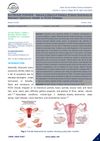 January 2020 in “Asian Journal of Basic Science & Research”
 Nutrease powder, a high-protein, low-carb supplement, can help manage Polycystic Ovary Syndrome symptoms, regulate periods, improve ovulation, and restore fertility.
January 2020 in “Case reports in endocrinology” Removing one ovary helped treat a woman's severe PCOS symptoms when medicine didn't work.
 January 2019 in “Springer eBooks”
 Acne is linked to inflammation and insulin resistance, and is associated with various syndromes that require different treatments.
 December 2015 in “University of Birmingham Institutional Research Archive (University of Birmingham)”
 AKR1C3 could be a treatment target for metabolic issues in PCOS.