9 citations
,
April 2010 in “Lung cancer” Combining gemcitabine with paclitaxel is more effective than with pemetrexed for advanced lung cancer.
3 citations
,
April 2021 in “Oncology Times” Trodelvy™ helped some patients with advanced breast cancer, but had side effects.
 1 citations
,
October 2014 in “Annals of oncology”
1 citations
,
October 2014 in “Annals of oncology” Paclitaxel and nab-paclitaxel can be safe and effective for advanced gastric cancer patients on hemodialysis.
8 citations
,
June 2022 in “Cancers” Epirubicin and cyclophosphamide cause more anemia and side effects than docetaxel and cyclophosphamide, but both are equally effective.
 2 citations
,
January 2025 in “Сибирский научный медицинский журнал”
2 citations
,
January 2025 in “Сибирский научный медицинский журнал” TS-13 effectively stops tumor growth and reduces chemotherapy side effects.
March 2022 in “Oncology Times” Tebentafusp-tebn improves survival rates in uveal melanoma patients but has common side effects like rash and fatigue.
 June 2026 in “Current Oncology Reports”
 Sacituzumab Tirumotecan shows promise in treating gynecologic cancers with manageable side effects.
 8 citations
,
April 2013 in “Journal of The American Academy of Dermatology”
8 citations
,
April 2013 in “Journal of The American Academy of Dermatology” Some breast cancer patients treated with high-dose docetaxel may experience permanent hair loss.
27 citations
,
May 2016 in “Integrative Cancer Therapies” Chrysin makes docetaxel more effective and reduces its side effects in lung cancer treatment.
 77 citations
,
January 1980 in “Carcinogenesis”
77 citations
,
January 1980 in “Carcinogenesis” TPA is about 50 times more effective at promoting tumors than MZ.
 3 citations
,
February 2023 in “Journal of drug delivery science and technology”
3 citations
,
February 2023 in “Journal of drug delivery science and technology” The new drug carriers show promise for better targeting and treating ovarian cancer.
October 2023 in “Indian Journal of Skin Allergy” Nab-paclitaxel chemotherapy can rarely cause lupus-like skin issues.
6 citations
,
July 2025 in “Cancer Medicine” ZSYY001 is safe, well-tolerated, and shows promise for treating advanced solid tumors.
Researchers made new compounds that could potentially be developed into anticancer drugs.
1 citations
,
March 2023 in “Medicine” The combination therapy is effective and well-tolerated for treating esophageal cancer.
 34 citations
,
October 2021 in “Scientific Reports”
34 citations
,
October 2021 in “Scientific Reports” Nobiletin-loaded vesicles effectively treat skin cancer by restoring normal miRNA and antioxidant levels.
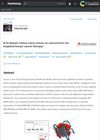 January 2025 in “Nanoscale”
 Boron/nitrogen-doped carbon nano-onions improve targeted breast cancer treatment by enhancing drug delivery and reducing side effects.
13 citations
,
June 2023 in “Frontiers in Pharmacology” Trastuzumab deruxtecan is effective for advanced breast cancer but has side effects like nausea and fatigue.
 April 2026 in “BMC Biotechnology”
 Curcumin spanlastics are the most effective for cancer therapy due to their strong antimicrobial, antioxidant, and antitumor effects.
 January 2025 in “Recent Patents on Anti-Cancer Drug Discovery”
 The treatment showed high response rates and was well-tolerated, potentially extending patient survival.
 3 citations
,
July 2019 in “Supportive Care in Cancer”
3 citations
,
July 2019 in “Supportive Care in Cancer” The lotion CG428 did not show effectiveness in treating permanent hair loss in breast cancer survivors.
January 2022 in “eJournal Kedokteran Indonesia” Both treatments are similarly effective, but paclitaxel-carboplatin is cheaper and has more severe side effects.
39 citations
,
August 2022 in “Pharmaceutics” Combining letrozole and quercetin in spanlastics may improve breast cancer treatment.
 March 2026 in “Pharmaceutics”
 Plant-derived nanovesicles show promise in cancer treatment but need standardized preparation.
1 citations
,
January 2012 in “Türk jinekoloji ve obstetrik derneði dergisi/Türk Jinekoloji ve Obstetrik Derneği dergisi” Most patients experienced significant but reversible hair loss during treatment.
 February 2021 in “Research Square (Research Square)”
 The Li-Pa/Ca and Do/Ca chemotherapy regimens for serous ovarian cancer showed better short-term and long-term results than the Pa/Ca regimen.
1 citations
,
October 2017 in “Annals of Oncology” Most patients treated with trastuzumab and paclitaxel experience some hair loss, but it's usually not severe.
 43 citations
,
February 2020 in “Clinica chimica acta”
43 citations
,
February 2020 in “Clinica chimica acta” Nano-sized plant-based chemicals could improve cervical cancer treatment by being more effective and causing fewer side effects than current methods.
34 citations
,
November 2023 in “Applied Materials Today” Nanoemulsions can effectively treat skin cancer with fewer side effects.
January 1985 in “Clinical research” Topical alpha-terthienyl with UVA may safely treat psoriasis without cancer risk.