 1 citations
,
February 1954 in “Journal of the American Geriatrics Society”
1 citations
,
February 1954 in “Journal of the American Geriatrics Society” Steroid hormones can help treat aging issues and improve health in elderly people.
 June 2026 in “Nano Research”
 3D bioprinted skin using liver cell exosomes helps heal wounds better.
 June 2026 in “University of Science and Technology Journal for Medical Sciences”
 PRP gel may be slightly more effective than phenytoin cream for healing diabetic foot ulcers.
 February 2026 in “BMC Plastic and Reconstructive Surgery”
 Induced pluripotent stem cells could improve chronic wound healing but face safety and effectiveness challenges.
 February 2026 in “Preprints.org”
 New therapies and personalized approaches improve wound healing and patient quality of life.
 February 2026 in “Frontiers in Medical Technology”
 Keratinocyte stem cells are crucial for skin renewal and have potential in wound healing and tissue regeneration.
 January 2026 in “Clinical Cosmetic and Investigational Dermatology”
 Polynucleotides show promise for improving skin conditions safely but need more research.
 December 2025 in “IP Indian Journal of Clinical and Experimental Dermatology”
 Androgenetic alopecia treatments are becoming more personalized and include new therapies like topical antiandrogens and regenerative strategies.
Magnetized saline water hydrogel helps heal pressure ulcers quickly in elderly patients.
 January 2025 in “Open Medicine”
 High-concentration cell-free adipose extract reduces scar formation and improves scar appearance.
 August 2024 in “UPI Journal of Pharmaceutical Medical and Health Sciences”
 PRP shows promise in musculoskeletal rehabilitation but needs standardized reporting for better outcomes.
 August 2024 in “Cell Death and Disease”
 Activating TLR9 helps heal wounds and regrow hair by using specific immune cells.

Elastin-like recombinamers show promise for better wound healing and skin regeneration.
 November 2023 in “Journal of Cosmetic Dermatology”
 Injecting a person's own fat into their scalp may help regrow hair and improve hair thickness in different types of hair loss.
 July 2020 in “International Journal of Research”
 High testosterone increases heart disease risk in women with PCOS.

PlacMA hydrogels from human placenta are versatile and useful for cell culture and tissue engineering.
 April 2019 in “Journal of Investigative Dermatology”
 Combining platelet-rich plasma injections and gel may effectively treat morphea, improving skin elasticity and reducing pain.
 January 2019 in “Advances in stem cells and their niches”
 Skin health and repair depend on the signals between skin stem cells and their surrounding cells.
 January 2018 in “Stem cells in clinical applications”
 Exosomes show promise for tissue repair and regeneration with advantages over traditional cell therapies.

Skin stem cells are crucial for maintaining and repairing skin, with potential for treating skin disorders and improving wound healing.
 January 2016 in “Springer eBooks”
 New materials and methods could improve skin healing and reduce scarring.
 November 2013 in “International Journal of Medical and Health Sciences”
 Doctors often miss Hair Tourniquet Syndrome, which can lead to serious damage if not treated quickly.
Wound healing is complex and requires more research to enhance treatment methods.
 December 2002 in “International Journal of Cosmetic Surgery and Aesthetic Dermatology”
 The books are valuable resources for cosmetic surgery and dermatology professionals.
 July 2002 in “Dermatologic Surgery”
 Understanding the scalp's five-layer structure is crucial for better surgical outcomes and fewer complications.
 July 1998 in “Dermatologic Surgery”
 Various techniques and tools for hair restoration were presented in 1998, including a mathematical model for donor area, use of lasers in surgery, methods for controlling grafted hair direction, and ways to increase graft yield. Satisfaction rates were around 39%, and studies showed trauma and dehydration can damage hair follicles.
 January 1994 in “Nihon Chikusan Gakkaiho”
 Collagen fibrils in mink skin change structure during hair growth, becoming looser and thicker in the active phase.
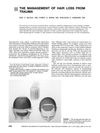 December 2002 in “Operative Techniques in Otolaryngology-head and Neck Surgery”
 Manage hair loss from trauma with scalp expansion, advancement flaps, and hair transplantation.
 1 citations
,
December 2024 in “Journal of Education Health and Sport”
1 citations
,
December 2024 in “Journal of Education Health and Sport” Anabolic steroids harm the heart, liver, hormones, muscles, and mental health.
 February 2026 in “American Journal of Clinical Dermatology”
 Radiotherapy can cause skin fibrosis, which is often overlooked and needs better treatment and evaluation.