 1 citations
,
February 2009 in “Journal of Investigative Dermatology”
1 citations
,
February 2009 in “Journal of Investigative Dermatology” Lipase H is important for hair follicle function and shaping hair fibers.
 June 2026 in “International Journal of Drug Delivery Technology”
 Herbal remedies show promise for managing premature hair greying but need more research.
 May 2026 in “Premier journal of science.”
 Future treatments for hair loss may focus on personalized and regenerative approaches.

Targeting androgen receptors in the skin is the most effective treatment for hyperandrogenism-related skin issues.
 April 2026 in “International Journal of Molecular Sciences”
 Targeting non-Smad pathways in TGF-β signaling may improve keloid treatment.
 March 2026 in “Scientific Reports”
 Ferulic acid may help hair grow by activating certain receptors in cells.
 February 2026 in “Frontiers in Pharmacology”
 Genetics can help tailor treatments for male pattern hair loss, improving outcomes like stabilization or modest regrowth.
 February 2026 in “International Journal of Molecular Sciences”
 3-Hydroxypropionic acid may help treat hair loss by promoting hair growth in cells.
February 2026 in “Trends in Sciences” i-PRF-derived exosomes can effectively promote hair growth and improve hair health in androgenetic alopecia.
 January 2026 in “Frontiers in Cell and Developmental Biology”
 Platelet-derived products can help regenerate the temporomandibular joint by enhancing natural healing processes.
 January 2026 in “Frontiers in Medicine”
 Acupuncture reduces anxiety and depression in women with PCOS.
 January 2026 in “Clinical Cosmetic and Investigational Dermatology”
 Early diagnosis and targeted anti-inflammatory treatments can improve outcomes in androgenetic alopecia with perifollicular inflammation and fibrosis.
 December 2025 in “Frontiers in Veterinary Science”
 Liaoning cashmere goats grow more cashmere by boosting fat production, supporting hair structure, and controlling inflammation.

Alopesi tedavisinde ilaçlar saç büyümesini teşvik eder ve yeni yaklaşımlar umut vaat eder.
 November 2025 in “Frontiers in Immunology”
 Immune cells are crucial for normal skin development and their dysfunction can cause skin disorders.
 October 2025 in “International Journal of Molecular Sciences”
 Early intervention in patch-type alopecia may prevent progression to more severe forms by targeting immune pathways and preserving keratin.
 August 2025 in “Scientific Reports”
 C4BPA protein may link acne severity and insulin resistance.
 May 2025 in “Journal of Food and Nutrition Research”
 Black wolfberry ferment may help regrow hair in cases of androgenetic alopecia.
 February 2025 in “International Journal of Molecular Sciences”
 Maternal melatonin improves offspring hair growth by affecting specific proteins and pathways.
 January 2025 in “Cellular & Molecular Biology Letters”
 Eicosanoids are crucial for skin health, and targeting their pathways may help treat skin conditions.
 December 2024 in “Frontiers in Veterinary Science”
 Dorper sheep's wool shedding is linked to specific genes and pathways, which may help understand human hair growth.
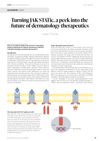 August 2024 in “New Zealand Medical Student Journal”
 JAK inhibitors show promise for treating skin diseases effectively and safely.
Curcuma aeruginosa Roxb. may help treat hair loss by affecting specific biological pathways.
 March 2024 in “Journal of Microbiology and Biotechnology”
 Phloroglucinol may help improve hair loss by promoting hair growth and reducing oxidative stress.
 January 2024 in “GeroScience”
 Using radiation to make mice's hair turn gray helps study and find ways to prevent or reverse hair graying.
 January 2024 in “Indian Journal of Pharmaceutical Sciences”
 Peach kernel extract may promote hair growth by boosting cell growth in hair follicles.
 December 2023 in “Trials”
 The trial is testing if a helmet that uses light can prevent hair loss during chemotherapy.
 December 2023 in “bioRxiv (Cold Spring Harbor Laboratory)”
 AP-2α and AP-2β proteins are essential for healthy adult skin and hair.
 July 2023 in “Frontiers in veterinary science”
 Certain long non-coding RNAs are important for controlling hair growth cycles in sheep.

The treatment was ineffective in humans.