 December 2025 in “Yemeni Journal of Agriculture & Veterinary Sciences”
 Many sheep and goats in Sana’a, Yemen, lack essential minerals and need supplements for better health.
 November 2025 in “Archives of Dermatological Research”
 Limelight (CB-EVs) safely promotes hair growth.
 November 2025 in “Journal of Cancer Research and Clinical Oncology”
 Endoscopic-assisted surgery leads to higher patient satisfaction in breast reconstruction.
 November 2025 in “EXPERIMENTAL ANIMALS”
 Stingless bee propolis may help regenerate hair follicles and improve pigment function in chemotherapy-induced hair loss.
 October 2025 in “Dermatology and Therapy”
 Ritlecitinib is being tested for effectiveness and safety in treating severe alopecia areata.
 October 2025 in “Revista Científica de Estética e Cosmetologia”
 Personalized hair care plans are essential for healthy hair.
 September 2025 in “Cureus”
 Personalized anti-aging treatments improve youthfulness and quality of life.
 September 2025 in “Dermatology and Therapy”
 Activated PRP effectively increases hair density and reduces hair loss in alopecia.
 August 2025 in “American Journal of Clinical Dermatology”
 Clinicians should use evidence-based tools and consider mental health when assessing alopecia areata to guide treatment.
 July 2025 in “International Journal of Dermatology Venereology and Leprosy Sciences”
 Microneedling may improve melasma treatment by boosting topical therapy effectiveness.
 June 2025 in “International Journal of Nephrology and Renovascular Disease”
 PLA2R1 overexpression harms kidney cells by stopping their growth cycle.
 May 2025 in “Journal of Experimental Pharmacology”
 Allium ascalonicum L. extract may help improve insulin resistance.
 April 2025 in “Dermatology and Therapy”
 Significant, lasting hair regrowth is needed to improve how patients with Alopecia Areata feel about their condition.
 March 2025 in “Asian Journal of Beauty and Cosmetology”
 Microspicule cosmetics improve skin whitening, pores, and barrier strength.
 January 2025 in “Acta Dermatovenerologica Alpina Pannonica et Adriatica”
 JAK inhibitors can help regrow hair in alopecia areata but have potential long-term risks and require careful monitoring.
Human placental extract effectively and safely improves melasma, ulcers, and alopecia areata.

Curly wool has more orthocortex than straight wool.
 January 2025 in “International Journal of Advanced Biochemistry Research”
 Alpha linolenic acid and linoleic acid help treat inflammatory skin conditions in dogs.
 January 2025 in “Fitoterapia”
 Signaling pathways are key targets for developing effective drugs.
 December 2024 in “Biomedical & Pharmacology Journal”
 Hair Tonic A, with white tea extract, is better for improving hair health.
 December 2024 in “Tạp chí Y Dược Huế”
 Stress greatly reduces the quality of life in women with PCOS-related infertility.
SH-SY5Y cell lysate is effective for diagnosing Satoyoshi syndrome.
 August 2024 in “JAMA Dermatology”
 Continuous baricitinib is needed to keep hair regrowth in severe alopecia areata.
 July 2024 in “Frontiers in Pharmacology”
 Pilose antler extracts help hair growth by activating hair follicle stem cells.
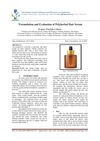 June 2024 in “International Journal of Pharmaceutical Research and Applications”
 Polyherbal hair serum can hydrate the scalp and promote hair growth safely.
 May 2024 in “Journal of clinical case studies reviews & reports”
 A man's health improved after treating his undiagnosed adrenal insufficiency, which caused fatigue and weight loss.
 April 2024 in “International Journal of Advanced Multidisciplinary Research and Studies”
 Early investigation and a team approach are crucial for managing primary amenorrhea effectively.
 April 2024 in “Contribuciones a las ciencias sociales”
 Combining essential oils with clay therapy effectively treats dandruff and seborrhea.
 April 2024 in “Journal of asthma and allergy”
 Abrocitinib effectively treated severe atopic dermatitis and mild alopecia areata in a 12-year-old boy after dupilumab failed.
 April 2024 in “Dermatology and therapy”
 In Denmark from 1995 to 2016, hospital-treated alopecia areata cases increased, mostly affecting women and those over 50.