5 citations
,
January 2025 in “Science Advances” 5α-reductase 2 is crucial for stress response in male rats.
5 citations
,
September 2024 in “International Journal of Molecular Sciences” 3D bioprinted lung cancer models in a mouse-like structure offer a better way to study radiation effects without using live animals.
5 citations
,
August 2021 in “STAR Protocols” The protocol helps visualize detailed structures in mouse skin and cells using scanning electron microscopy.
3 citations
,
September 2024 in “Brain and Behavior” ASA and CM may protect the brain and work better together.
 3 citations
,
February 2023 in “International Journal of Molecular Sciences”
3 citations
,
February 2023 in “International Journal of Molecular Sciences” Autologous Platelet and Extracellular Vesicle-Rich Plasma (PVRP) has potential in enhancing tissue regeneration and improving hair conditions, but its effectiveness varies due to individual differences.
 3 citations
,
January 2021
3 citations
,
January 2021 Non-surgical treatments like thread lifts, PRP therapy, HIFU, and radiofrequency effectively rejuvenate and tighten facial skin.
2 citations
,
September 2025 in “Journal of Clinical Medicine” Regenerative medicine could revolutionize aesthetic surgery, but needs careful validation and ethical use.
 2 citations
,
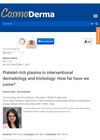
June 2021 in “Cosmoderma”
2 citations
,
June 2021 in “Cosmoderma” Platelet-rich plasma (PRP) shows promise in skin and hair treatments but results vary with preparation methods.
1 citations
,
January 2026 in “Science Advances” The 3D skin model mimics pemphigus vulgaris and helps test treatments.
 1 citations
,
September 2023 in “Molecules (Basel. Online)”
1 citations
,
September 2023 in “Molecules (Basel. Online)” Plant sterols have health benefits like lowering cholesterol, but more research is needed to understand their effects and improve their extraction and sustainability.
 1 citations
,
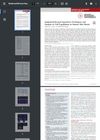
December 2022 in “The journal of investigative dermatology/Journal of investigative dermatology”
1 citations
,
December 2022 in “The journal of investigative dermatology/Journal of investigative dermatology” Choosing the right method to separate skin layers is key for good skin cell research.
1 citations
,
August 2019 in “IntechOpen eBooks” Mesotherapy might be a useful addition to dental surgery to reduce drug use and side effects, but more research is needed.
 May 2026 in “Dove Medical Press (Taylor and Francis Group)”
 Buffy coat PRP is more effective for hair growth in androgenetic alopecia than apheresis PRP.
 May 2026 in “International Journal of Molecular Sciences”
 The new human placental extract may help prevent hair graying and reduce nerve pain from chemotherapy.

Platelet-rich plasma improves skin flap survival by reducing tissue death.
 May 2026 in “Clinical Cosmetic and Investigational Dermatology”
 The buffy coat method slightly outperformed apheresis in patient-reported hair improvement for treating hair loss.
 May 2026 in “Journal of the American Academy of Dermatology”
 Sublingual minoxidil safely increases hair growth in transgender people on testosterone therapy.
 April 2026 in “International Journal of Molecular Sciences”
 Diabetic patients need tailored cosmetic treatments for skin aging, with new therapies showing promise.
 March 2026 in “Preprints.org”
 A diabetes-informed approach is essential for safe and effective skin rejuvenation treatments in diabetics.
 February 2026 in “International Journal of Molecular Sciences”
 PDLLA filler can improve hair thickness and shine by reducing age-related hair decline.
February 2026 in “Advanced Sensor Research” Advanced technologies can improve understanding and monitoring of skin-brain interactions.
 January 2026 in “Cosmetics”
 New regenerative treatments show promise in improving hair growth for androgenetic alopecia.
January 2026 in “Dermatologic Therapy” Microneedling may improve hair loss treatments by enhancing drug delivery and hair growth.
December 2025 in “Molecules” A new method effectively detects trace sex hormones in cosmetics, ensuring safety.
Poly-D,L-lactic acid boosts hair growth in aged skin by activating hair follicle stem cells.
December 2025 in “Experimental Dermatology” Improving blood vessel health and controlling uric acid may help manage alopecia areata.
PPARβ/δ helps yaks adapt to high altitudes by regulating lipid metabolism in their coats.
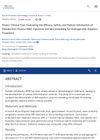 September 2025 in “Journal of Cosmetic Dermatology”
 PRP and microneedling both effectively improve hair growth and thickness for treating hair loss.
August 2025 in “Skin Appendage Disorders” Low-dose oral minoxidil might help with hair loss during chemotherapy, but more research is needed.
August 2025 in “Dermatopathology” Pilomatricomas are often linked to genetic syndromes, especially Apert syndrome, and genetic analysis is crucial for diagnosis.