 May 2026 in “Zenodo (CERN European Organization for Nuclear Research)”
 The serum with microneedling effectively treats alopecia areata by enhancing drug delivery and is safe and patient-friendly.
1 citations
,
February 2025 in “Archives of Dermatological Research” Using Excimer light with topical steroids is the most effective treatment for alopecia areata.
4 citations
,
April 1955 in “Archives of Dermatology” Hydrocortisone ointment effectively improved eyebrow skin and hair in a 10-year-old.
 August 2025 in “Indian Dermatology Online Journal”
 Both treatments work equally well for hair regrowth, but the lotion has fewer side effects.
 1 citations
,
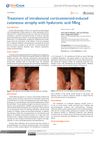
July 2018 in “Journal of dermatology & cosmetology”
1 citations
,
July 2018 in “Journal of dermatology & cosmetology” Hyaluronic acid successfully treated skin atrophy caused by corticosteroid injections.
 9 citations
,
December 2020 in “Dermatologic Therapy”
9 citations
,
December 2020 in “Dermatologic Therapy” Certain drugs are effective for skin conditions like psoriasis, vitiligo, and hair loss.
 66 citations
,
July 2003 in “International Journal of Dermatology”
66 citations
,
July 2003 in “International Journal of Dermatology” Betamethasone valerate foam is more effective and safe for treating mild-to-moderate alopecia areata than betamethasone dipropionate lotion.
December 2025 in “JEADV Clinical Practice” These new skin treatments are safer and more effective with minimal side effects.
June 2022 in “Zenodo (CERN European Organization for Nuclear Research)” The hydrogel with neem and tridax extracts effectively treats seborrheic dermatitis.
39 citations
,
January 1977 in “Dermatology” The treatment cleared psoriasis in some patients but caused side effects in most.
 July 2026 in “Dermatology Practical & Conceptual”
 Methotrexate via microneedling is more effective than triamcinolone for treating stubborn alopecia areata.
1 citations
,
January 1989 in “Carcinogenesis” Dexamethasone reduces inflammation and delays skin cell changes caused by TPA.
 22 citations
,
March 1963 in “Archives of dermatology”
22 citations
,
March 1963 in “Archives of dermatology” A woman regrew her hair significantly using a corticosteroid cream with a plastic cover.
September 2022 in “Journal of Sulaimani Medical College” The combination treatment showed some improvement but wasn't significantly better than using betamethasone valerate alone.
 July 1988 in “Journal of The American Academy of Dermatology”
 Various dermatologic treatments were effective for skin conditions like acne, rosacea, hair loss, and psoriasis from December 1986 to December 1987.
Triamcinolone acetonide and betamethasone 1.75 mg/ml are both effective for treating alopecia areata.
24 citations
,
January 2014 in “PubMed” Imiquimod cream 5% effectively treated generalized discoid lupus erythematosus.
2 citations
,
February 2022 in “Journal of Pharmacy and Pharmacology” Methotrexate-loaded formulations showed promise for psoriasis treatment but need careful evaluation.
39 citations
,
March 1976 in “British Journal of Dermatology” Intralesional steroid therapy is useful for treating various skin conditions.
11 citations
,
January 1956 in “Journal of Investigative Dermatology” 1 citations
,
January 2008 in “SKINmed Dermatology for the Clinician” Treatment with prednisolone and dapsone stopped new blisters and partially healed previous ones.
 May 2025 in “Journal of the Egyptian Womenʼs Dermatologic Society”
 Vitamin D3 is a safe and effective alternative to steroids for treating alopecia areata, with fewer side effects.
 October 2023 in “Benha Journal of Applied Sciences”
 Methotrexate and vitamin D3 are potentially more effective and safer than triamcinolone for treating localized alopecia areata.
New treatments for skin diseases in 1979 showed promising results with fewer side effects.
 December 2025 in “Cosmoderma”
 Systemic corticosteroids help manage vitiligo by slowing progression and aiding repigmentation.
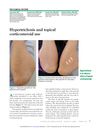 February 2022 in “Cleveland Clinic Journal of Medicine”
 Prolonged use of topical corticosteroids can cause excessive hair growth.
 April 2017 in “Journal of Investigative Dermatology”
 Triptolide effectively and safely reduces actinic keratosis lesions in mice.
11 citations
,
July 1993 in “The journal of investigative dermatology/Journal of investigative dermatology”  November 2024 in “IP Indian Journal of Clinical and Experimental Dermatology”
 Dermoscopy is a useful tool for diagnosing and managing topical steroid dependent face.
 1 citations
,
June 2023 in “Cureus”
1 citations
,
June 2023 in “Cureus” Spironolactone may help improve symptoms and tear quality in dry eye disease.