
Transplanting cultured skin sheets improved acne scars in four patients.
 61 citations
,
September 2020 in “Bioactive Materials”
61 citations
,
September 2020 in “Bioactive Materials” A special dressing called FEA-PCEI can speed up wound healing, reduce scars, and help grow new hair follicles, but only at the right dosage.
July 2024 in “Dermatological Reviews” PRP, exosomes, and stem cells show promise in improving skin and hair conditions but need standardized treatment protocols.
 2 citations
,
November 2023 in “Curēus”
2 citations
,
November 2023 in “Curēus” Platelet-rich plasma (PRP) speeds up skin wound healing and has potential in medical and cosmetic uses.
December 2025 in “Pharmaceutics” EV-based drug delivery shows promise but faces challenges in standardization and scalability.
7 citations
,
January 2003 in “Journal of cosmetic and laser therapy” The filterless flashlamp-based system effectively delays hair regrowth and improves skin condition.
January 2010 in “프로그램북(구 초록집)” 20 citations
,
November 2003 in “American Journal Of Pathology” Fibroblasts from healthy donors can prevent changes seen in recessive epidermolysis bullosa simplex.
April 2024 in “International journal of molecular sciences” Light-based treatment, Photobiomodulation, shows promise for non-invasive skin therapy with few side effects.
3 citations
,
July 2025 in “Journal of Cosmetic Dermatology” Combining Endo-RF with PRP may improve acne scars better than Endo-RF alone.

Exosome treatments may cause mild inflammation, new blood vessel growth, and hair growth, detectable by ultrasound.
CRISPR gene editing reduces harmful molecules in cells from Emery–Dreifuss Muscular Dystrophy patients.
 January 2026 in “International Journal of Applied Pharmaceutics”
 Nanoparticle-embedded microneedles improve drug delivery through the skin but face challenges in stability and safety.
 80 citations
,
June 2008 in “Biomaterials”
80 citations
,
June 2008 in “Biomaterials” EVAL membranes help create cell structures that can regrow hair follicles.
99 citations
,
July 1996 in “Journal of Investigative Dermatology” Using patient's own hair cells can effectively heal chronic leg ulcers.
1 citations
,
February 2026 in “ACS Nano” The TLMG hydrogel improves wound healing and monitoring with strong adhesion and conductivity.
 5 citations
,
February 2015 in “Journal of Bio- and Tribo-Corrosion”
5 citations
,
February 2015 in “Journal of Bio- and Tribo-Corrosion” Plasma jet treatments can clean hair and might replace peroxide for hair care.
1 citations
,
August 2024 in “Journal of Cosmetic Dermatology” Oscillatory punches work better for soft scalps or deep punches in FUE surgery.

4-Aminopyridine gel speeds up burn wound healing and improves skin regeneration.
 October 2023 in “Journal of Drug Delivery Science and Technology”
 Electrospun nanofibers might be a promising new treatment for hair loss.
 11 citations
,
October 2017 in “Journal of Investigative Dermatology”
11 citations
,
October 2017 in “Journal of Investigative Dermatology” Applying certain inhibitors to the skin can promote hair growth without harming cells.
 62 citations
,
March 2015 in “PLOS ONE”
62 citations
,
March 2015 in “PLOS ONE” Pre-seeding scaffolds with fibroblasts improves skin wound healing.
 March 2026 in “Dermatologic Surgery”
 Platelet-rich plasma speeds up wound healing after hair transplant surgery.
Low-level laser therapy is a safe, painless method that effectively treats acne and improves skin without post-treatment care.
The DNS FUE technique offers discreet hair transplants with high satisfaction and low damage rates.
 109 citations
,
November 2005 in “The journal of investigative dermatology. Symposium proceedings/The Journal of investigative dermatology symposium proceedings”
109 citations
,
November 2005 in “The journal of investigative dermatology. Symposium proceedings/The Journal of investigative dermatology symposium proceedings” Targeting hair follicles can improve skin treatments and reduce side effects.
 April 2018 in “The journal of investigative dermatology/Journal of investigative dermatology”
 Higher fluence in hair removal damages hair follicles more, while lower fluence mimics natural hair regression, with long-term IPL treatments effectively reducing hair.
December 2005 in “Dermatologic surgery” Er:YAG laser therapy is ineffective for treating facial eruptive vellus hair cysts due to early recurrence and side effects.
Tiny particles called extracellular vesicles show potential for improving skin health in cosmetics, but more research is needed to confirm their safety and effectiveness.
 15 citations
,
October 2006 in “Journal of the American Academy of Dermatology”
15 citations
,
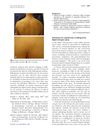
October 2006 in “Journal of the American Academy of Dermatology” Liquid nitrogen spray caused a temporary, harmless swelling under the skin in an elderly woman.