
Individualized treatment improves symptoms and quality of life for women with PCOS.
 January 2024 in “Wiadomości Lekarskie”
 VSELs may hold the key to longer life through regenerative therapies.
 January 2024 in “ASEAN Journal of Psychiatry”
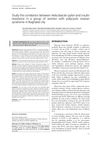
 H. pylori infection may be linked to insulin resistance in women with PCOS.
 January 2024 in “Wiadomości Lekarskie”
 Countries should improve sex education, access to contraception, and legal abortion options.
 January 2019 in “Advances in stem cells and their niches”
 Skin health and repair depend on the signals between skin stem cells and their surrounding cells.
 May 2015 in “Journal of Investigative Dermatology”
 Wnt-3a helps grow more skin stem cells, which could lead to new hair loss treatments.
 April 2026 in “BMC Biotechnology”
 Curcumin spanlastics are the most effective for cancer therapy due to their strong antimicrobial, antioxidant, and antitumor effects.
 July 2022 in “International journal of medical science and clinical invention”
 Women with irregular periods should be checked for PCOS and treated early to prevent complications, with birth control pills helping to manage symptoms.
 4 citations
,
May 2020 in “Cureus”
4 citations
,
May 2020 in “Cureus” A new genetic mutation causing Werner's syndrome was found in an Indian man.
 1 citations
,
August 2017 in “Semiotica”
1 citations
,
August 2017 in “Semiotica” The paper concludes that breast cancer treatment involves complex interactions between medical symptoms, patient experiences, and commercial influences, requiring a holistic approach.
 August 2023 in “Research Square (Research Square)”
 Two microRNAs affect hair follicle development in sheep by targeting specific genes.
 October 2021 in “Research Square (Research Square)”
 Melatonin affects certain genes and pathways involved in cashmere goat hair growth.
 December 2025 in “Ciencia Latina Revista Científica Multidisciplinar”
 Nanotechnology shows promise in improving hair loss treatments by enhancing drug delivery and reducing side effects.
 2 citations
,
September 2022 in “Frontiers in genetics”
2 citations
,
September 2022 in “Frontiers in genetics” Different proteins are linked to the varying thickness of sheep and goat hair types.
 November 2023 in “bioRxiv (Cold Spring Harbor Laboratory)”
 Adipocytes can change into fibroblast-like cells to help with wound healing.
 336 citations
,
August 2015 in “European Journal of Epidemiology”
336 citations
,
August 2015 in “European Journal of Epidemiology” The Rotterdam Study found risk factors for elderly diseases, links between lifestyle and genetics with health conditions, and aimed to explore new areas like DNA methylation and sensory input effects on brain function.
January 2026 in “JCEM Case Reports” Genetics may play a significant role in gender dysphoria.
4 citations
,
May 2023 in “Pigment Cell & Melanoma Research” BMI1 is essential for preventing hair greying and maintaining hair color.
1 citations
,
November 2025 in “Aging Cell” EDA2R is a key gene linked to ageing and diseases, and targeting it may help treat conditions like hair loss and chronic diseases.
July 2025 in “Preprints.org” Specific miRNA profiles can help diagnose and treat alopecia areata.
77 citations
,
November 2018 in “Cell” Lung immune cells can be trained to better fight infections after a virus.
16 citations
,
November 2020 in “In Vitro Cellular & Developmental Biology - Animal” Microfollicles can effectively model human hair follicles for research and testing.
November 2025 in “Journal of Investigative Dermatology” Tanning ability is linked to specific DNA changes in skin genes.
45 citations
,
August 2023 in “Trends in Cell Biology” Controlling cellular changes can enable safe rejuvenation without cancer risk.
4 citations
,
January 2025 in “International Journal of Yoga” Yoga helps manage PCOS symptoms and improves overall health.
1 citations
,
April 2015 in “Munich Personal RePEc Archive (Ludwig Maximilian University of Munich)” Skin and hair aging involves mitochondrial issues, telomere shortening, and hormonal changes, with iron affecting hair loss in pre-menopausal women.
164 citations
,
February 2010 in “Journal of Cell Science” Human dermal stem cells can become functional skin pigment cells.
49 citations
,
March 2017 in “PubMed” Enhancers and super-enhancers are key in controlling specific gene activity and can play a role in cancer development.
37 citations
,
August 2020 in “BMC Genomics” Hair greying is mainly influenced by age, with genetics playing a smaller role.
10 citations
,
March 2022 in “Frontiers in Oncology” HOTTIP and miR-10b contribute to glioma therapy resistance by affecting cell behavior, suggesting they could be targets for treatment.