12 citations
,
April 2023 in “Pharmaceutics” Semifluorinated alkanes are promising for delivering drugs in various medical applications.
11 citations
,
January 2020 in “Journal of Drugs in Dermatology” Intralesional triamcinolone acetonide is effective and safe for treating early to mid-stage traction alopecia.
September 2025 in “Journal of Polymer Science” Functionalized bacterial cellulose can improve medical tissue engineering.
March 2016 in “Actas dermo-sifiliográficas/Actas dermo-sifiliográficas” Stopping the use of a tight headband and using specific treatments led to partial hair regrowth.
11 citations
,
January 2025 in “Regenerative Therapy” Tissue-engineered scaffolds help heal difficult wounds by supporting cell growth and repair.
49 citations
,
January 2024 in “Regenerative Biomaterials” The new nanofiber patch speeds up diabetic wound healing and improves healing quality.
15 citations
,
November 2024 in “Materials” PHAs are promising biodegradable materials for medical and dental uses.
8 citations
,
September 2024 in “International Journal of Molecular Sciences” Polymers can be designed to mimic natural cell environments for medical uses.
7 citations
,
November 2025 in “Pharmaceutics” Polymer- and lipid-based nanostructures can improve wound healing by controlling contamination, supporting cell growth, and aiding tissue repair.
5 citations
,
September 2023 in “International Journal of Molecular Sciences” FucoPol hydrogel membranes are promising for delivering drugs on the skin.
4 citations
,
September 2025 in “Pharmaceutics” Natural hydrogels can improve wound healing but face challenges in becoming widely used in clinics.
3 citations
,
July 2023 in “Acta Biomaterialia” PepACS offers a safer, eco-friendly way to perm, dye, and repair hair.
 1 citations
,
January 2022 in “Skin appendage disorders”
1 citations
,
January 2022 in “Skin appendage disorders” Hair shedding after childbirth can reveal a pre-existing condition of hair loss due to tight hairstyles.
 August 2026 in “Molecular Biomedicine”
 Hydrogels are promising for treating complex diseases due to their adaptability and potential in drug delivery and tissue repair.

Chirality influences the structure, strength, and biological uses of peptide-based hydrogels.
 February 2026 in “Preprints.org”
 New therapies and personalized approaches improve wound healing and patient quality of life.
November 2025 in “Advanced Healthcare Materials” Charge-conversion chemistry improves hair-rebonding by enhancing penetration and strength.
 August 2024 in “Cosmetics”
 K18® and Olaplex® both effectively repair bleached hair, improving its strength, smoothness, and overall health.
 April 2024 in “Bioactive materials”
 New microneedle treatment with growth factors and a hair loss drug shows better and faster hair growth results than current treatments.
36 citations
,
March 2023 in “Bioengineering” Barbed sutures improve surgical outcomes and efficiency but are limited by cost and strength issues.
 2 citations
,
January 2017 in “Recent clinical techniques, results, and research in wounds”
2 citations
,
January 2017 in “Recent clinical techniques, results, and research in wounds” Using tissue expanders with galeotomies for post-burn alopecia is faster and has fewer complications.
 4 citations
,
January 2019 in “Annals of dermatology/Annals of Dermatology”
4 citations
,
January 2019 in “Annals of dermatology/Annals of Dermatology” Changing hairstyles can help hair regrow in children with hair loss from tight braids or ponytails.
 438 citations
,
October 2010 in “Oncogene”
438 citations
,
October 2010 in “Oncogene” Keratins help protect cells, aid in cancer diagnosis, and influence cancer behavior and treatment.
 34 citations
,
March 2012 in “Circulation”
34 citations
,
March 2012 in “Circulation” Bridging anticoagulation may raise post-surgery bleeding risks.
 2 citations
,
April 2017 in “Journal of Investigative Dermatology”
2 citations
,
April 2017 in “Journal of Investigative Dermatology” Tofacitinib helped over half of the patients with severe hair loss regrow at least 50% of their hair.
 April 2025 in “Journal of the Association for Research in Otolaryngology”
 NM2 and RLC phosphorylation are essential for normal inner ear hair cell function.
Malnourished people have weaker hair that is easier to pluck.
 44 citations
,
January 2019 in “Journal of Translational Medicine”
44 citations
,
January 2019 in “Journal of Translational Medicine” Macrophages are essential for successful skin growth in reconstructive surgery.
 November 2020 in “INDIAN JOURNAL OF APPLIED RESEARCH”
 Women with hair loss have weaker hair that breaks more easily.
 418 citations
,
September 2012 in “Nature”
418 citations
,
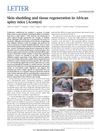
September 2012 in “Nature” African spiny mice can regenerate skin, hair, and cartilage, but not muscle, and their unique abilities could be useful for regenerative medicine.