11 citations
,
July 2024 in “Biomimetics” Injectable biomimetic gels can help heal tissues and deliver drugs but need improvements in strength and delivery.
62 citations
,
August 2023 in “International Journal of Nanomedicine” Pluronic F127-derived hydrogels show promise for effective wound healing and repair.
 December 2025 in “Journal of Pharma Insights and Research.”
 Injectable cryogels can deliver drugs and aid tissue repair with minimal surgery.
 February 2015 in “Journal of Biomedical Materials Research Part B: Applied Biomaterials”
 4-META resin heals skin wounds faster and better than cyanoacrylate.
17 citations
,
October 2023 in “Science Progress” Polycaprolactone and barium titanate composites show promise for use in biomedical applications.
 4 citations
,
August 2023 in “Materials”
4 citations
,
August 2023 in “Materials” New synthetic polymers help improve skin wound healing and can be enhanced by adding natural materials and medicines.
 March 2025 in “Frontiers in Pharmacology”
 The hydrogel dressing rapidly heals wounds and promotes blood clotting better than existing options.
 January 2022 in “Social Science Research Network”
 A special coating was made for artificial hair fibers that can slowly release silver ions for up to 56 days, providing long-term protection against bacteria and inflammation.
The method effectively creates uniform, viable cell spheroids for 3D cell culture.
April 2026 in “Applied Materials Today” The dressing helps heal chronic wounds by swelling and releasing drugs when needed.
13 citations
,
August 2022 in “Nanomaterials” The new wound dressing helps heal abdominal wall defects faster by improving the wound environment.
September 2025 in “International Journal of Cosmetic Science” A balanced mix of cationic guar gum and anionic surfactants improves hair conditioning and protection.
5 citations
,
January 2017 in “Chalmers Publication Library (Chalmers University of Technology)” Cubosomes enhance antimicrobial peptide stability and effectiveness.
 March 2011 in “Focus on surfactants”
 Several companies launched new hair care ingredients in 2011 to improve conditioning, color retention, combability, and heat protection.
26 citations
,
September 2024 in “National Science Review” Janus hydrogels improve medical adhesives by mimicking natural barriers for better tissue integration.

Stiffness gradients in alginate gels can guide cancer cell invasion and study cellular behaviors.
August 2025 in “Marine Drugs” The new composite material is safe and has anticoagulant properties.
 June 2026 in “Gümüşhane Üniversitesi Fen Bilimleri Enstitüsü Dergisi”
 PVA/agar films with Achillea millefolium essential oil are promising for wound dressings due to good strength and selective antibacterial effects.
1 citations
,
January 1998 in “Cosmetics and toiletries” Both amodimethicone and dimethicone copolyol amine are effective hair conditioners.
March 2026 in “ACS Omega” The hydrogel significantly speeds up wound healing and improves skin recovery.
A new method allows for controlled, long-lasting delivery of retinoic acid through the skin with less inflammation.
 17 citations
,
August 2024 in “Discover Nano”
17 citations
,
August 2024 in “Discover Nano” Polyesters show promise for repairing damaged blood vessels.
 18 citations
,
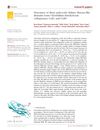
February 2015 in “Acta Crystallographica Section D: Structural Biology”
18 citations
,
February 2015 in “Acta Crystallographica Section D: Structural Biology” The study concludes that certain domains in Clostridium histolyticum enzymes are structurally unique, bind calcium to become more stable, and play distinct roles in breaking down collagen, with potential applications in medicine and drug delivery.
36 citations
,
March 2005 in “Biotechnology and Bioengineering” A new method speeds up insulin amyloid fibril growth, useful for studying diseases.
31 citations
,
January 2011 in “Journal of Biomaterials and Nanobiotechnology” Biodegradable polysaccharide gels can improve skin healing and reduce scarring.
The research found how certain drugs and polymers form stable complexes, which could help develop new pharmaceutical forms.
 January 2025 in “Regenerative Biomaterials”
 The hydrogel helps reduce scarring and improve wound healing by releasing salvianolic acid B in acidic conditions.
3 citations
,
January 2002 in “Springer eBooks” Alkaline hair relaxers damage hair, but cationic and non-ionic polymers can help reduce this damage.
3 citations
,
July 2025 in “Gels” Engineered protein hydrogels improve medical treatments by mimicking natural body structures.
The research shows how certain drug molecules form stable structures with polymers, which could help create new drug forms.