45 citations
,
January 2021 in “Stem Cell Research & Therapy” The combination of stem cell medium and hydrogel effectively reduces and improves hypertrophic scars.
116 citations
,
April 2020 in “Stem Cell Research & Therapy” Wharton's jelly stem cells show diverse traits and functions.
 56 citations
,
May 2017 in “Nature Cell Biology”
56 citations
,
May 2017 in “Nature Cell Biology” Hair can regrow after certain stem cells are lost because other stem cells can take over their role.
 29 citations
,
March 2012 in “Stem Cell Research & Therapy”
29 citations
,
March 2012 in “Stem Cell Research & Therapy” Some stem cells in the body rarely divide, which could help create better treatments for diseases and aging.
 27 citations
,
August 2006 in “Laboratory Investigation”
27 citations
,
August 2006 in “Laboratory Investigation” SCF and ET-1 together significantly increase skin pigmentation and melanin production.
 26 citations
,
October 2023 in “Neuroscience Bulletin”
26 citations
,
October 2023 in “Neuroscience Bulletin” Stem cell therapy could help regenerate inner ear hair cells to treat hearing loss.
 23 citations
,
October 2021 in “Cell Stem Cell”
23 citations
,
October 2021 in “Cell Stem Cell” Hair thinning causes stem cell loss through a process involving Piezo1, calcium, and TNF-α.
20 citations
,
May 2011 in “Journal of Clinical Investigation” The study created a mouse model to mimic degenerative diseases for testing tissue repair and new therapies.
15 citations
,
March 2021 in “Journal of Nanobiotechnology” A new method was developed to grow and maintain human hair follicle stem cells for hair reconstruction.
9 citations
,
April 2025 in “Stem Cell Research & Therapy” MSC-derived conditioned media can improve skin treatments.
8 citations
,
January 2014 in “Journal of Stem Cell Research & Therapy” Stem cell therapy improves healing and reduces pain in cutaneous radiation syndrome.
4 citations
,
March 2024 in “Journal of Investigative Dermatology” SPRY1 deficiency in skin cells causes stem cells to move to the skin surface, leading to increased pigmentation.
 March 2026 in “Molecular and Cellular Biomedical Sciences”
 EH-MSCs may help treat hair loss by reducing inflammation.
 August 2025 in “Stem Cell Research & Therapy”
 Exosomes from stem cells can help regrow hair better than minoxidil.

Dexamethasone-primed stem cell media shows promise in treating lupus by reducing symptoms and inflammation.
 June 2024 in “Дерматовенерология Косметология”
 Autologous follicular stem cells improved hair loss in 57% of patients.
December 2023 in “Journal of Asia Pacific Aesthetic Sciences” Stem cell-derived cytokines and growth factors may be a promising alternative for treating hair loss.
October 2021 in “The journal of investigative dermatology/Journal of investigative dermatology” Desmoglein 3 is important for keeping hair follicle stem cells inactive and maintaining their special properties.
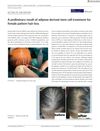 April 2021 in “Journal of Cosmetic Dermatology”
 Stem cell treatment improved hair density in female hair loss patient.
 May 2026 in “Stem Cell Research & Therapy”
 Dental pulp stem cell exosomes can help regrow hair by improving blood flow around hair follicles.
 March 2025 in “World Journal of Stem Cells”
 Stem cell exosomes may help treat hair loss by promoting hair growth.
3 citations
,
December 2024 in “Stem Cell Reports” Low fucosylation boosts stem cell growth in the eye.
October 2025 in “Preprints.org” Adipose mesenchymal stem cells are best for skincare because they reduce inflammation and are safe and effective.
214 citations
,
April 2017 in “Cell” Different small areas within hair follicles send specific signals that control what type of cells stem cells become.
209 citations
,
October 2008 in “The Journal of Pathology” Stem cell niches are essential for tissue health and repair.
176 citations
,
January 2013 in “Proceedings of the National Academy of Sciences” BMP and Wnt signaling balance controls hair follicle stem cell activity and hair growth.
 156 citations
,
December 2012 in “Cell Stem Cell”
156 citations
,
December 2012 in “Cell Stem Cell” TGF-β is crucial for controlling stem cell behavior and changes in its signaling can lead to diseases like cancer.
 78 citations
,
June 2013 in “Science”
78 citations
,
June 2013 in “Science” Mice without the Sept4/ARTS gene heal wounds better due to more stem cells that don't die easily.
64 citations
,
January 2009 in “The International journal of developmental biology” Hair follicle stem cells are controlled by their surrounding environment.
53 citations
,
September 2007 in “Annals of the New York Academy of Sciences” Thymosin beta 4 helps hair grow by boosting stem cell activity.