 1 citations
,
May 2016 in “Dermatologic Surgery”
1 citations
,
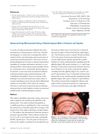
May 2016 in “Dermatologic Surgery” The document concludes that using a phototrichogram with a protractor and tapeline is a reliable and noninvasive way to measure hair loss.
 June 2026 in “International Journal of Advanced Biochemistry Research”
 Non-dermatophyte moulds like Aspergillus and Penicillium can cause skin issues in pets.
 May 2026 in “International Journal of Research Publication and Reviews”
 The polyherbal hair dye is a safe, effective, and eco-friendly alternative to synthetic dyes.
 April 2026 in “Frontiers in Pharmacology”
 Erzhi Pill shows promise for health issues but needs better quality control and clearer usage guidelines.
 January 2026 in “Nanoscale Advances”
 Microneedles combined with light therapy can improve skin disease diagnosis and treatment.
 December 2025 in “International Journal of Pharmacology”
 iPSC-derived artificial platelets show promise for consistent and effective regenerative therapies.
 October 2025 in “Asian Journal of Pharmaceutical Research and Development”
 Phytosome technology improves the absorption and effectiveness of citrus flavonoids.
 August 2025 in “Frontiers in Pharmacology”
 [6]-Gingerdiol 3-monoacetate shows promise for treating T. whipplei infections.
 March 2025 in “Scientific Reports”
 Menthol-based microemulsions improve skin delivery of finasteride and silodosin.
 April 2024 in “Frontiers in pharmacology”
 Cynoglossum amabile has medicinal potential but poses safety concerns due to liver toxicity.
 November 2023 in “Borneo Journal of Pharmacy”
 Sappan wood hair tonic helps protect and repair damaged hair.
 November 2023 in “Dermatology Research and Reports”
 A stable ivermectin cream may effectively treat rosacea without long-term antibiotics.
 May 2023 in “Jurnal farmasi sains dan praktis”
 The hair tonic with cinnamon oil and coconut oil was stable and caused very mild irritation.

A new system for classifying curly hair types using precise measurements can improve hair care products and cultural inclusion.
 January 2023 in “Open Access Research Journal of Biology and Pharmacy”
 Martynia annua shows promise for future medical research due to its many medicinal properties.

New methods to classify curly hair types were developed based on shape and strength.
 May 2021 in “Austin journal of pharmacology and therapeutics”
 Physalis fruits have medicinal properties that can help treat various diseases and have anti-inflammatory, antioxidant, antibacterial, and antitumor effects.

Wildebeest stress and hormone levels are influenced by food availability, human presence, and reproductive cycles.
 January 2018 in “Springer eBooks”
 PDE inhibitors, especially PDE4 inhibitors like apremilast, are effective for certain inflammatory skin conditions but have side effects and can be costly.
 September 2016 in “International Journal of Herbal Medicine”
 Buxus wallichiana has compounds that support its use in traditional medicine.

Improve ventilation and address environmental issues to reduce health complaints.
 April 2026 in “bioRxiv (Cold Spring Harbor Laboratory)”
 Red light exposure can slow aging in mice by improving fat metabolism.
 March 2026 in “Plastic and Aesthetic Research”
 Adipose-derived stem cell exosomes can help reduce skin aging from UV exposure.
 January 2026 in “Frontiers in Pharmacology”
 Wedelolactone may help treat inflammation, infections, cancer, bone loss, and organ damage.
 January 2026 in “RSC Advances”
 The hydrogel helps heal wounds without scars by releasing two drugs gradually.
 January 2026 in “Journal of Hard Tissue Biology”
 Red LED light boosts cell activity and growth, aiding wound healing and blood vessel repair.
 January 2026 in “Florence Research (University of Florence)”
 Wound healing involves four phases with various cells, but more research is needed on certain interactions.

Plant compounds may help manage PCOS, endometriosis, and menstrual issues.
 December 2025 in “International Journal of Research in Dermatology”
 Isotretinoin effectively treats severe acne but has serious side effects and requires careful monitoring.

A new imaging method helps see and study touch nerve endings in mouse skin.