 1 citations
,
December 2013 in “Turkderm”
1 citations
,
December 2013 in “Turkderm” Use of cosmeceuticals during pregnancy and breastfeeding is not recommended due to insufficient safety data.
 1 citations
,
September 2012 in “TURKDERM”
1 citations
,
September 2012 in “TURKDERM” Stress may affect alopecia areata, but it's not a confirmed trigger.
 1 citations
,
January 2011 in “The annals of clinical and analytical medicine”
1 citations
,
January 2011 in “The annals of clinical and analytical medicine” Hair mesotherapy showed improvement in hair growth and thickness without side effects.
 June 2026 in “Gümüşhane Üniversitesi Fen Bilimleri Enstitüsü Dergisi”
 PVA/agar films with Achillea millefolium essential oil are promising for wound dressings due to good strength and selective antibacterial effects.
 May 2026 in “Journal of Basic and Clinical Health Sciences”
 FAGA shows varied hair thickness, while TE has more empty follicles.
 May 2026 in “İzmir Katip Çelebi Üniversitesi Sağlık Bilimleri Fakültesi Dergisi”
 3D printed alginate-gelatin hydrogels are promising for drug delivery and testing treatments for diseases like Alzheimer's.
 May 2026 in “Frontiers in Pharmacology”
 Long-term use of 5α-reductase inhibitors may improve survival in men with kidney cancer.
 May 2026 in “Commagene Journal of Biology”
 Anti-aging peptides can improve skin appearance but need better delivery methods and more research.
 April 2026 in “Health Sciences Quarterly”
 Many skin issues in hospitalized adults go unnoticed, needing better checks and teamwork.
 April 2026 in “Frontiers in Cell and Developmental Biology”
 GPCRs are vital for wound healing by affecting cell growth and immune response.
 March 2026 in “Konuralp Tıp Dergisi”
 People with normal hemoglobin but low ferritin experience more fatigue and certain symptoms like restless leg syndrome and dizziness.
 March 2026 in “Balkan Sağlık Bilimleri Dergisi”
 Hemşire navigatör modeli, PKOS'lu kadınların tedaviye uyumunu ve yaşam kalitesini artırır.
 March 2026 in “Dicle Medical Journal / Dicle Tip Dergisi”
 Blood groups are not linked to hidradenitis suppurativa.
 March 2026 in “DergiPark (Istanbul University)”
 Biotinoyl tripeptide-1 nanoparticles protect hair from heat damage.
 January 2026 in “Journal of Contemporary Studies in Epidemiology and Public Health”
 Women with PCOS often have severe PMS, but managing anemia and regular menstruation can help reduce symptoms.
 January 2026 in “Revista Científica de la Facultad de Ciencias Veterinarias”
 Ozonated oil and Centella asiatica extract improve wound healing in mice, with each having specific benefits.
 January 2026 in “Ankara Medical Journal”
 Pregnancy-related stress may cause hair loss in women in their third trimester.
 January 2026 in “Journal of Clinical Practice and Research”
 Bitemporal alopecia often occurs with other hair conditions and can help predict and monitor these issues.
 December 2025 in “Bolu Abant Izzet Baysal Universitesi Tip Fakultesi Abant Tip Dergisi”
 Minoxidil did not significantly affect epilepsy in rats.
 December 2025 in “TURKDERM”
 Facial trichostasis spinulosa is a chronic condition with significant cosmetic impact, especially in young women.
 December 2025 in “Doğu Fen Bilimleri Dergisi”
 Vimentin, desmin, and laminin help maintain rat skin structure.
 December 2025 in “Frontiers in Nutrition”
 Collagen supplements may improve skin, joints, and recovery, especially with added nutrients.
 December 2025 in “Uludağ Üniversitesi Tıp Fakültesi Dergisi”
 Social media significantly influences medical professionals' interest in cosmetic procedures.
 November 2025 in “Journal of Contemporary Medicine”
 Women with PCOS have higher cardiometabolic risks.
 September 2025 in “Dicle Medical Journal / Dicle Tip Dergisi”
 Skin issues are common in people with neurodegenerative diseases.
 September 2025 in “Online Türk Sağlık Bilimleri Dergisi”
 Low zinc and folate levels are linked to hair loss in children.
 September 2025 in “Turkish Journal of Dermatology”
 Oxidative stress may play a role in alopecia areata, but depression and suicide risk are similar to healthy peers.
 August 2025 in “Tobacco Induced Diseases”
 Smoking harms skin quality and health, which may encourage quitting.
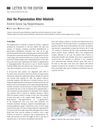 April 2025 in “Turkish Journal of Hematology”
 Nilotinib may cause gray hair to return to its original color.

Histopathological confirmation is crucial for accurately diagnosing challenging alopecia areata cases.