 13 citations
,
June 2010 in “Journal of dermatological treatment”
13 citations
,
June 2010 in “Journal of dermatological treatment” Diphencyprone is effective for treating patchy hair loss in alopecia areata, but tacrolimus is not.
December 2025 in “Preprints.org” Aging dermal papilla cells can be reprogrammed for potential hair growth and skin repair.
 1 citations
,
January 2023 in “SAGE open medical case reports”
1 citations
,
January 2023 in “SAGE open medical case reports” A new treatment called deucravacitinib helped a patient with severe hair loss grow their hair back quickly.
May 2023 in “Spectrochimica Acta Part A: Molecular and Biomolecular Spectroscopy” A new green method accurately measures finasteride and tadalafil in drugs and plasma.
2 citations
,
April 2024 in “Urology Annals” Taking dutasteride every other day works as well as daily and better preserves sexual function.
 21 citations
,
January 2023 in “Biomaterials Science”
21 citations
,
January 2023 in “Biomaterials Science” Microneedle patches with alpha-arbutin and resveratrol can effectively reduce skin pigmentation without irritation.
August 2023 in “Journal of Investigative Dermatology” Dutasteride may help treat frontal fibrosing alopecia.
 1 citations
,
July 2023 in “Journal of Cutaneous and Aesthetic Surgery”
1 citations
,
July 2023 in “Journal of Cutaneous and Aesthetic Surgery” The "Multi-Wave Punch" improves hair transplant results by reducing damage to hair follicles.
September 1999 in “International Society of Hair Restoration Surgery”  17 citations
,
June 2012 in “Australasian Journal of Dermatology”
17 citations
,
June 2012 in “Australasian Journal of Dermatology” Finasteride and low-dose dutasteride combo improves hair growth and reduces hair loss with no major side effects.
June 2013 in “Faculty Opinions – Post-Publication Peer Review of the Biomedical Literature” Trichopigmentation is a non-invasive, reversible treatment for hair loss that offers natural-looking results for both men and women.
April 2025 in “International Journal of Clinical & Medical Case Studies” Dextroamphetamine may help treat alopecia areata.
January 2003 in “Journal of Practical Aesthetic and Plastic Surgery” Both steroid treatments effectively regrow hair in severe alopecia areata.
 April 2025 in “Journal of Skin and Stem Cell”
 PDRN from trout sperm helps skin and hair regeneration but is costly and complex to produce.
13 citations
,
July 2016 in “Indian Journal of Dermatology” DPR can show different hair characteristics, as seen in two brothers with normal hair.
 September 2017 in “Journal of Investigative Dermatology”
 Hair follicle cells change their DNA packaging during growth cycles and when grown in the lab.
 August 1998 in “Dermatologic Surgery”
 Follicular unit hair transplantation is better than Miniflap Hair Restoration due to less scarring and more natural results.
9 citations
,
February 2012 in “Clinical Neurology and Neurosurgery” Dystonia may be part of PAS-4 and linked to immune issues.
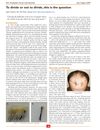 July 2009 in “International Society of Hair Restoration Surgery”
 Dividing hair grafts may make hair look fuller, but more research is needed.
18 citations
,
December 2016 in “European journal of pharmacology” A new compound slows cancer cell growth and causes cell death by blocking cell cycle progression and increasing cell-damaging molecules.
December 2007 in “대한피부과학회지” The treatment increased total hair count but wasn't significantly better than placebo.
8 citations
,
June 2021 in “Frontiers in Medicine” The combination of the excimer lamp and liquor carbonis detergens is more effective for scalp psoriasis than the lamp alone.
October 2023 in “Biomimetics” The new hair-dyeing shampoo is safe, colors hair evenly, and strengthens it.

Dupilumab improved hair and skin in a woman with Netherton syndrome.

Dupilumab improved hair and skin in a woman with Netherton syndrome.
268 citations
,
December 2003 in “Experimental Dermatology” Hair follicle cells can become fat and bone cells.
 3 citations
,
January 2018 in “PeerJ”
3 citations
,
January 2018 in “PeerJ” Researchers created a long-lasting mouse skin cell strain that may help with hair growth research and treatments.
 5 citations
,
November 2020 in “Frontiers in Cell and Developmental Biology”
5 citations
,
November 2020 in “Frontiers in Cell and Developmental Biology” The "Two-Cell Assemblage" assay is a new, simple method to identify substances that may promote hair growth.
 March 1998 in “Journal of dermatological science”
 Diphencyprone initially increases mouse hair growth, then slows it, possibly due to changes in specific protein levels.