2 citations
,
May 2025 in “BMJ Open” Patients with alopecia areata face treatment barriers due to lack of reimbursement and need more support and information.
2 citations
,
March 2025 in “Nanoenergy Advances” Bioelectronic nanogenerators show promise for cancer treatment but need better understanding and development.
2 citations
,
February 2024 in “International journal of molecular sciences” Gut health affects skin diseases, and probiotics might help.
 2 citations
,
July 2023 in “Obstetrics & Gynecology”
2 citations
,
July 2023 in “Obstetrics & Gynecology” Imiquimod may be a better non-surgical treatment for cervical pre-cancer, but its effectiveness for vaginal pre-cancer is unclear, and it has some side effects.
 2 citations
,
May 2023 in “Frontiers in Bioengineering and Biotechnology”
2 citations
,
May 2023 in “Frontiers in Bioengineering and Biotechnology” The document concludes that more research is needed on making and understanding biomaterial scaffolds for wound healing.
2 citations
,
May 2022 in “Stem cell research & therapy” Disrupted stem cell signals in hairpoor mice cause hair loss.
2 citations
,
March 2022 in “PubMed” Nutrafol® and Viviscal® can slightly help hair growth in hair loss.
2 citations
,
October 2021 in “Journal of Mind and Medical Sciences” Early screening and HPV vaccination reduce cervical cancer risk.
1 citations
,
June 2026 in “Dermato” Ritlecitinib is effective for treating alopecia areata, showing significant hair regrowth with mild side effects.
1 citations
,
May 2025 in “BMC Genomics” lncRNAs may help control cashmere goat hair growth by responding to light changes.
1 citations
,
February 2025 in “Journal of the Neurological Sciences” Beta-trace protein may help diagnose and predict treatment response in certain nerve disorders.
1 citations
,
January 2025 in “Advances in Wound Care” Dermal sheath cells help heal wounds by showing both skin and connective tissue traits.
1 citations
,
November 2023 in “International journal of molecular sciences” Cannabinoids might help treat skin problems but more research is needed to be sure.
1 citations
,
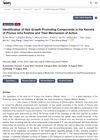
October 2022 in “Bioengineering” Keratin helps skin cells mature when added to a collagen mix, which could be important for skin and hair health.
 1 citations
,
August 2022 in “Molecules”
1 citations
,
August 2022 in “Molecules” Prunus mira kernels contain components that can promote hair growth in mice.
1 citations
,
November 2011 in “British journal of pharmacology” Enzymes are classified into six types and are essential for many biological processes, with only a few targeted by drugs.
1 citations
,
August 2008 in “Plant cell monographs” 1 citations
,
August 2005 in “Springer eBooks” Alopecia areata is an autoimmune disease with genetic links, treatable with certain medications, and can affect mental health.
 July 2026 in “Applied Sciences”
 Excimer laser therapy can help regrow hair in alopecia areata but is less effective for severe cases and has mixed results for cicatricial alopecia.
 July 2026 in “Pharmaceuticals”
 Aging and chronic diseases impair muscle repair, but integrated therapies like exercise and gene editing may help.
 July 2026 in “Diagnostics”
 Integrating various skin imaging technologies improves diagnosis and treatment in dermatology.
 May 2026 in “Nursing Reports”
 Slovak breast cancer survivors have moderate quality of life, with emotional and cognitive strengths but social and physical challenges, needing targeted support.
Machine learning improves DNA predictions for eye and hair color, but challenges remain for skin tone and facial features.
December 2025 in “Pharmaceutics” Araliadiol may help reduce skin aging and inflammation without killing cells.
November 2025 in “Journal of Clinical Medicine” The drinkable supplement reduced hair shedding and increased hair growth in women.
 September 2025 in “Australasian Journal of Dermatology”
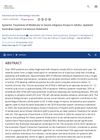
 New medications could improve treatment for severe alopecia areata in Australia.
August 2025 in “Journal of Clinical Medicine” Skin diseases alter the skin's microbiome, and prebiotic treatments might help.
 May 2025 in “Journal of the Egyptian Womenʼs Dermatologic Society”
 Vitamin D3 is a safe and effective alternative to steroids for treating alopecia areata, with fewer side effects.
May 2025 in “International Journal of Women’s Dermatology” 5-alpha reductase inhibitors and spironolactone don't increase gynecological tumor risk, glucagon-like-peptide-1 receptor agonists may increase alopecia risk, sanitary pads can cause dermatitis, early hidradenitis suppurativa intervention is crucial for Hispanic patients, community education boosts skin cancer awareness, metformin may improve skin cancer survival, LNG-IUDs can increase acne risk, machine learning accurately detects basal cell carcinoma, JAK-inhibitors may raise miscarriage risk, inclusive skincare ads affect those with darker skin, and CCCA in Black women might involve autoimmunity.
 March 2025 in “International Journal of Molecular Sciences”
 The study created a mouse model to better understand hair follicle stem cells' role in hair growth and repair.