 March 2026 in “Nutrients”
 Hair manganese may relate to cardiometabolic health, not coronary artery disease severity.

Researchers developed a cost-effective, ethical skin model using hairless guinea pig cells for toxicology studies.
 March 2026 in “International Journal of Dermatology and Venereology”
 Abrocitinib significantly improved hair regrowth in adolescents with alopecia areata without serious safety issues.
March 2026 in “Journal of the American Academy of Dermatology” The treatment significantly improved lymphocytic cicatricial alopecia symptoms in most patients.
January 2026 in “Journal of the European Academy of Dermatology and Venereology”  January 2026 in “SSRN Electronic Journal”
 Riboflavin with blue light speeds up hair dyeing, making it faster, safer, and long-lasting with less hair damage.
January 2026 in “BioMed Research International” The combination of rosemary and castor oils may promote hair growth in mice.
 December 2025 in “Medical Sciences”
 Regenerative therapies show promise for hair regrowth, but more research and standardization are needed.
December 2025 in “International Journal of Research in Dermatology” The Ayurvedic treatment safely and effectively restores natural hair color by increasing black hair and reducing grey hair.
November 2025 in “BMC Genomics” Wrinkled skin in Xiang pigs is linked to gene changes related to oxidative stress and the extracellular matrix.
October 2025 in “International Journal of Advanced Multidisciplinary Research and Studies” Hairless dogs have unique skin adaptations to regulate temperature and protect against environmental factors.
 September 2025 in “Journal of Science Innovations and Nature of Earth”
 Anthocyanins in berries and purple veggies offer health benefits but need better processing for full use.
September 2025 in “Journal of the American Academy of Dermatology”  August 2025 in “Majalah Obstetri & Ginekologi”
 Vaccination helps reduce long COVID symptoms in women with PCOS.
June 2025 in “JEADV Clinical Practice” Scarring alopecia is linked to higher rates of vitamin D deficiency, metabolic issues, mental health problems, thyroid disease, and other health conditions.
 May 2025 in “International Medical Case Reports Journal”
 Lichen planus pigmentosus may indicate undetected hepatitis C infection.
 April 2025 in “Turkish Journal of Hematology”
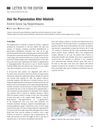
 Nilotinib may cause gray hair to return to its original color.
 April 2025 in “International Journal of Homoeopathic Sciences”
 Homeopathy may effectively treat pilonidal sinus without surgery.
March 2025 in “Journal of Investigative Dermatology” The program increased awareness of traction alopecia but didn't significantly change hairstyling habits.
 February 2025 in “International Journal of Morphology”
 Vitamin E can reduce the negative effects of valproic acid on hair and skin development.
 January 2025 in “Bioengineering”
 Combining PRS with TAFR is promising for treating complex fistulas, with most patients achieving long-term healing.
January 2025 in “Indian Journal of Dermatopathology and Diagnostic Dermatology” Dermoscopy helps diagnose rare GLPLS in males.
January 2025 in “Open Science Framework” Current evidence is insufficient to fully endorse regenerative therapies for hair loss.
 January 2025 in “Journal of Pharmacognosy and Phytochemistry”
 Plant-based pigments in shampoo offer vibrant colors and scalp benefits, meeting quality standards and providing a natural alternative to synthetic dyes.
January 2025 in “International Journal Of Scientific Advances” Topical testosterone can cause acne-like skin changes.
 October 2024 in “Journal of the Endocrine Society”
 Feminizing hormone therapy increases kidney filtration rate.
September 2024 in “Genes” Genes affect pig hair patterns, aiding better breeding.
September 2024 in “Digital Commons - University of South Florida (University of South Florida)” Hormones can change ptarmigan feather color from white to pigmented.
 July 2024 in “Open Repository of the University of Porto (University of Porto)”
 Dutasteride is more effective than finasteride for hair growth, and pregabalin effectively treats neuropathic pain.
 June 2024 in “Archives of dermatological research”
 Both treatments work, but Minoxidil 0.5% MMP® is better for certain scalp areas and less advanced hair loss.