 May 2026 in “Journal of Health and Allied Sciences NU”
 Optimized culture conditions improve human epidermal stem cell growth for skin regeneration.
 May 2026 in “Journal of Cutaneous and Aesthetic Surgery”
 Trichoscopy helps monitor changes and detect issues after hair transplants.
 March 2026 in “Journal of Skin and Sexually Transmitted Diseases”
 Long hair can cause hair loss in the middle of the scalp, and cutting it shorter helps.
 February 2026 in “International Journal of Recent Surgical and Medical Sciences”
 Human exosomes are effective for targeted treatments but face scalability issues, while plant exosomes are cost-effective for cosmetics.
 January 2026 in “Journal of Cutaneous and Aesthetic Surgery”
 The journal had a successful year with many submissions and downloads, and plans a special oncology issue for 2026.

Loose anagen hair syndrome in children may improve with age, but treatment results vary.

Hair restoration is advancing with new treatments and needs collaboration across fields for effective, evidence-based care.

Combining systemic steroids and dithranol can effectively regrow hair in severe alopecia areata.

JAK inhibitors effectively regrow hair in alopecia areata but hair loss often returns after stopping treatment.

A rare skin reaction occurred when a man took paracetamol, causing a new rash in an area already affected by hair loss.

Dynaplast tape reduces swelling after hair transplants effectively.

Understanding hair follicle signaling can improve hair disorder treatments.
 November 2025 in “Journal of Skin and Sexually Transmitted Diseases”
 Trichofolliculoma was found in a person with amniotic band syndrome for the first time.
 October 2025 in “Indian Journal of Physiology and Pharmacology”
 Early diagnosis and treatment of endocrine disorders like HAIR-AN syndrome can improve outcomes in adolescents.
 October 2025 in “Journal of Skin and Sexually Transmitted Diseases”
 Alopecia areata patients often have undetected thyroid issues, so routine thyroid screening is recommended.
 October 2025 in “Asian Journal of Oral Health and Allied Sciences”
 Autologous growth factor concentrate therapy shows promise for treating early-stage hair loss safely and effectively.
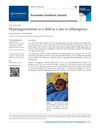 November 2024 in “Karnataka Pediatric Journal”
 Chikungunya can cause hyperpigmentation in children and should be considered in diagnosis.
 September 2024 in “Cosmoderma”
 The young man has complete hair loss and skin bumps, with no other health issues or family history.
 September 2024 in “Indian Journal of Skin Allergy”
 Technology, like stem cell therapy and teledermatology, is improving dermatology care.
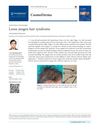 February 2023 in “Cosmoderma”
 Loose anagen hair syndrome causes easily shed hair but usually improves with time.
 1 citations
,
June 2024 in “Cosmoderma”
1 citations
,
June 2024 in “Cosmoderma” Most patients with alopecia areata in Syria are young adult males, often with patchy scalp hair loss.
 March 2026 in “Cosmoderma”
 Venusia CeraPlus cream and lotion effectively reduce eczema severity and improve skin moisture.
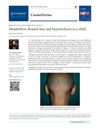 January 2026 in “Cosmoderma”
 A 9-year-old girl has a rare hair disorder causing beaded, sparse hair.
 December 2025 in “Cosmoderma”
 Systemic corticosteroids help manage vitiligo by slowing progression and aiding repigmentation.
 November 2025 in “Cosmoderma”
 We should value inner beauty and individuality over artificial beauty.
 August 2024 in “Cosmoderma”
 3D-printed hair follicles could revolutionize hair loss treatments by providing unlimited hair grafts.
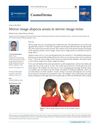
Mirror-image twins can have alopecia areata on opposite sides of their heads.
 December 2023 in “Cosmoderma”
 Lifestyle changes can improve skin conditions and overall health.
 September 2023 in “Cosmoderma”
 Early diagnosis and treatment of favus can prevent permanent hair loss.
 June 2026 in “Indian Journal of Postgraduate Dermatology”
 A 50-year-old man undergoing treatment with the epidermal growth factor receptor inhibitor (EGFRI) lapatinib for stage 2 breast carcinoma developed a papulopustular rash, a common side effect of EGFRIs, affecting 50-100% of patients. This rash, part of the 'PRIDE' complex, includes various cutaneous adverse effects such as xerosis and eczema. The patient was treated with doxycycline and hydrocortisone cream, showing significant improvement within a week. Acneiform eruptions, which lack comedones, may serve as a potential marker for therapeutic response to EGFRI drugs, although evidence is inconsistent. The rash typically appears within 1-2 weeks of therapy, peaks at 3-4 weeks, and subsides gradually. Patients are advised on sun protection and gentle skincare to manage symptoms.