 April 2025 in “PharmacoEconomics - Open”
 Patients with Alopecia Areata are willing to trade life duration for better quality of life.
Baricitinib may reactivate trichilemmal cysts in people with a history of these cysts.
 April 2025 in “Journal of the Faculty of Medicine Baghdad”
 Alopecia areata patients may have higher T3 and cortisol levels, suggesting a hormonal link.
 April 2025 in “International Journal of Homoeopathic Sciences”
 Homeopathy helped regrow hair and improve emotional health in alopecia areata.
 April 2025 in “International Journal of Homoeopathic Sciences”
 A 7-year-old boy's hair regrew and his well-being improved after homeopathic treatment for alopecia areata.
 March 2025 in “Kerala Journal of Ayurveda”
 Ayurvedic treatments successfully regrew hair and reduced hair loss in a woman with alopecia areata.
 March 2025 in “International Journal of Scientific Research in Science and Technology”
 Early diagnosis and personalized treatment can lead to significant hair regrowth in children with alopecia areata.
 February 2025 in “American Journal of Biomedical Science & Research”
 A rare combination of hair loss and excessive fine hair growth was found in celiac disease patients.
New therapies like JAK inhibitors, PRP, and stem cell treatments show promise for better alopecia management.
 January 2025 in “Balkan Medical Journal”
 Baricitinib helps regrow hair in severe alopecia areata and is safe, but more research is needed.
 January 2025 in “SKIN The Journal of Cutaneous Medicine”
 Calcipotriol's effectiveness for treating alopecia areata is unclear and needs more research.
 January 2025 in “Repository of the Academy's Library (Library of the Hungarian Academy of Sciences)”
 Baricitinib is effective and safe for treating severe alopecia areata.
 January 2025 in “International Journal of Homoeopathic Sciences”
 Personalized homeopathic treatment may help manage alopecia areata.
 January 2025 in “Advances in Dermatology and Allergology”
 The Polish version of the Alopecia Areata Quality of Life Index is a reliable tool for assessing quality of life in Polish-speaking patients with alopecia areata.
 January 2025 in “ARC Journal of Dermatology”
 Black patients are underrepresented in alopecia research, highlighting the need for more inclusive studies.
 January 2025 in “International Journal of Pharmaceutical Research and Development”
 Herbal products are preferred for treating hair loss due to their reliability in promoting regrowth.
 January 2025 in “International Journal of Dermatology Venereology and Leprosy Sciences”
 Current treatments for alopecia areata can help hair grow but don't cure the disease.
 December 2024 in “Nordisk tidsskrift for helseforskning”
 People with alopecia areata face challenges but find ways to cope and live fulfilling lives.
 December 2024 in “Kufa Medical journal”
 Higher levels of IL-17A and IL-2 are linked to alopecia areata.
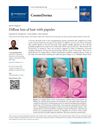 September 2024 in “Cosmoderma”
 The young man has complete hair loss and skin bumps, with no other health issues or family history.
 August 2024 in “Clinical and Medical Engineering Live”
 An integrated approach can help treat childhood alopecia areata.
 July 2024 in “International Journal of Medical Arts”
 Latanoprost is more effective than minoxidil for treating alopecia areata.
 April 2024 in “Bioscience trends”
 Higher levels of certain DNAs in blood may indicate hair follicle damage in alopecia areata patients.
 April 2024 in “Dermatology and therapy”
 In Denmark from 1995 to 2016, hospital-treated alopecia areata cases increased, mostly affecting women and those over 50.
 February 2024 in “Scientific reports”
 Four genes are potential markers for hair loss condition alopecia areata, linked to a specific type of cell death.
 February 2024 in “International Journal of Research in Dermatology”
 Thyroid tests may not be needed for all vitiligo and alopecia areata patients unless thyroid disease symptoms appear.
 February 2024 in “Sohag Medical Journal”
 Various local treatments for alopecia areata show promise, but individualized plans and more research are needed.
 January 2024 in “Dermatology practical & conceptual”
 Male gender and family history predict alopecia areata recurrence.
 January 2024 in “Dermatology Practical & Conceptual”
 Spotted lunula may help identify alopecia areata.
 January 2024 in “American journal of clinical dermatology”
 Ritlecitinib is safe and well-tolerated for treating alopecia areata in patients aged 12 and older.