Telogen hair loss affects emotional well-being and quality of life, with no standard treatment available.
 May 2026 in “Microorganisms”
 Herbal extract shampoo improves scalp health and hair growth in seborrheic alopecia.
 May 2026 in “Medical Sciences”
 Vesicle-based therapies from stem cells and plants improve burn healing and could be safe, scalable alternatives to cell transplants.
 April 2026 in “Antioxidants”
 Broccoli sprout extract may help treat breast cancer by reducing tumor growth and promoting cancer cell death.
"Bider" markings in Dun Mongolian horses are caused by a complex network of genes and pathways.
 April 2026 in “Preprints.org”
 Cold Atmospheric Plasma shows promise in treating aggressive breast cancer by targeting cancer cells while sparing normal tissue.
 March 2026 in “Pharmaceutics”
 Plant-derived nanovesicles show promise in cancer treatment but need standardized preparation.
 March 2026 in “Science China Materials”
 SeV-Tp speeds up healing of drug-resistant infections by targeting wounds and killing bacteria with light activation.
 March 2026 in “Pharmaceuticals”
 Xiaoban Kangfu capsules contain compounds that may help with antioxidants, reducing inflammation, and promoting hair growth.
 February 2026 in “Nature Communications”
 A specific group of immune and skin cells may cause chronic inflammation in atopic dermatitis.

Polydopamine is promising for personalized medicine and biomedical technology due to its strong adhesion and biocompatibility.
 February 2026 in “Medicina”
 Hyaluronic Acid Profhilo® reduces skin inflammation and nerve-related pain in atopic dermatitis.
 February 2026 in “Frontiers in Microbiology”
 Skin bacteria help heal wounds and restore healthy skin.
 February 2026 in “Cosmetics”
 Fenugreek is a promising cosmetic ingredient for skin and hair care.
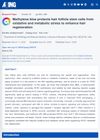
Methylene blue helps hair growth by protecting hair stem cells from stress.
 February 2026 in “Molecules”
 BBR-SA nanomedicine is a safe and effective treatment for breast cancer.
 February 2026 in “Inflammopharmacology”
 Pistacia atlantica leaf ointment effectively heals wounds like phenytoin, with added antibacterial and anti-inflammatory benefits.
 February 2026 in “International Journal of Molecular Sciences”
 Combining hyperthermia with natural compounds and conventional treatments improves cancer therapy effectiveness and reduces side effects.
 February 2026 in “International Journal of Molecular Sciences”
 Extracellular vesicles show promise for medical use but face challenges in standardization and safety.
January 2026 in “Microsystems & Nanoengineering” New technologies replicate human skin for testing without animals.
January 2026 in “Pharmaceutics” New drug delivery systems show promise in effectively treating pathological scars.
January 2026 in “International Journal of Molecular Sciences” Hemp's compounds can be used in natural insecticides, cosmetics, and food supplements.
January 2026 in “Materialia” Porcine ADM scaffold helps hair growth in mice.
January 2026 in “Cosmetics” The fermented solution from Platycladus orientalis leaves may boost hair growth and reduce inflammation.
Machine learning improves DNA predictions for eye and hair color, but challenges remain for skin tone and facial features.
January 2026 in “Burns & Trauma” NLRP3 helps control inflammation and repair in wound healing, making it a potential target for treatment.
January 2026 in “Burns & Trauma” RNA modifications help heal wounds and could lead to new treatments.
January 2026 in “Aging and Disease” DKK proteins could help diagnose and treat various non-cancerous diseases.
January 2026 in “Methods in molecular biology” Using PMA treatment before sequencing helps accurately identify living microbes on the scalp.
December 2025 in “Biomolecules” Targeting protein S-palmitoylation could lead to new skin disease treatments.