Technology expands design thinking possibilities, requiring a hybrid, reflective approach.
 April 2026 in “Journal of Pharmaceutical Innovation”
 Curcumin nanocrystal gel improves skin absorption and is safe and effective for topical use.
 March 2026 in “Journal of Clinical and Basic Psychosomatics”
 Tianmeng oral liquid may help with insomnia, anxiety, and depression.
 January 2026 in “AYUSHDHARA”
 Prachanna followed by Chirabilwa lepa is more effective for alopecia areata than Prachanna followed by Gunja lepa.
 January 2026 in “Journal of Hard Tissue Biology”
 Red LED light boosts cell activity and growth, aiding wound healing and blood vessel repair.
 January 2026 in “Journal of Biomedical Research”
 Small extracellular vesicles from stem and immune cells show promise for treating various diseases but face challenges in clinical use.
 December 2025 in “Bolu Abant Izzet Baysal Universitesi Tip Fakultesi Abant Tip Dergisi”
 Minoxidil did not significantly affect epilepsy in rats.
 December 2025 in “INSTITUTE OF MOLECULAR BIOLOGY & BIOTECHNOLOGIES TRANSACTIONS”
 Asteraceae plants are valuable in traditional medicine for treating various diseases.
 December 2025 in “Universities Journal of Phytochemistry and Ayurvedic Heights”
 Herbal medicines need strict quality control to ensure safety and authenticity.
 December 2025 in “Journal of Ovarian Research”
 Vitamin B6 may help activate dormant follicles.
 December 2025 in “Open Repository of the University of Porto (University of Porto)”
 Pharmacists play a crucial role in improving patient outcomes through personalized care and staying updated with scientific advancements.
 December 2025 in “Nature Communications”
 Skin organoids can model tuberculosis infection and help test treatments.
 November 2025 in “Frontiers in Veterinary Science”
 A 1.0% tyrosine diet increases melanin in chicken feathers.
 November 2025 in “Nanoscale Advances”
 Inorganic nanoparticle-based scaffolds can improve wound healing by fighting bacteria and helping tissue grow.
 November 2025 in “International Journal of Applied and Experimental Biology”
 Hemp shows promise for skincare and hair care due to its therapeutic properties, but standardization and clinical evidence are needed.
 October 2025 in “Pakistan journal of urology.”
 Personalized, minimally invasive treatments improve urology outcomes.
 October 2025 in “Journal of Drug Delivery and Therapeutics”
 Senna Makki is mainly effective as a laxative, but more research is needed for other uses.
 October 2025 in “Interdiciplinary Journal and Hummanity (INJURITY)”
 Kalimantan herbal plants have beneficial compounds supporting traditional medicine and potential therapeutic uses.
New peptides can delay aging and improve cell function.
 October 2025 in “International Journal For Multidisciplinary Research”
 Traditional healers in Raichur use 69 plants to treat various ailments, highlighting the need to preserve this knowledge.
 September 2025 in “Medical Materials Research”
 Microneedles offer a painless, precise, and versatile method for drug delivery and disease treatment.
Blocking autophagy worsens lipid buildup and dysfunction in brain cells after injury.
 August 2025 in “Aesthetic Cosmetology and Medicine”
 Blue light can damage hair and scalp, leading to hair loss.
 June 2025 in “Medical academic journal”
 Modified liposomes with exosomes effectively deliver RNA to stem cells.
 June 2025 in “Asia-Pacific Journal of Molecular Biology and Biotechnology”
 Papain from papaya may help treat cardiovascular diseases by breaking down fibrin.
 June 2025 in “Journal of Endocrinological Investigation”
 Adrenal disorders often cause high blood pressure in young people.
 June 2025 in “International Journal of Research and Review”
 Unani medicine offers a natural, effective approach to treating hair loss with minimal side effects, but needs more scientific validation.
 June 2025 in “Journal of Neonatal Surgery”
 Managing PCOD involves lifestyle changes like exercise, healthy eating, and avoiding smoking and alcohol.
 April 2025 in “Al-Rafidain Journal of Medical Sciences ( ISSN 2789-3219 )”
 Cuscuta reflexa extract may help treat benign prostatic hyperplasia by reducing inflammation and oxidative stress.
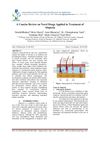
New therapies like JAK inhibitors, PRP, and stem cell treatments show promise for better alopecia management.